
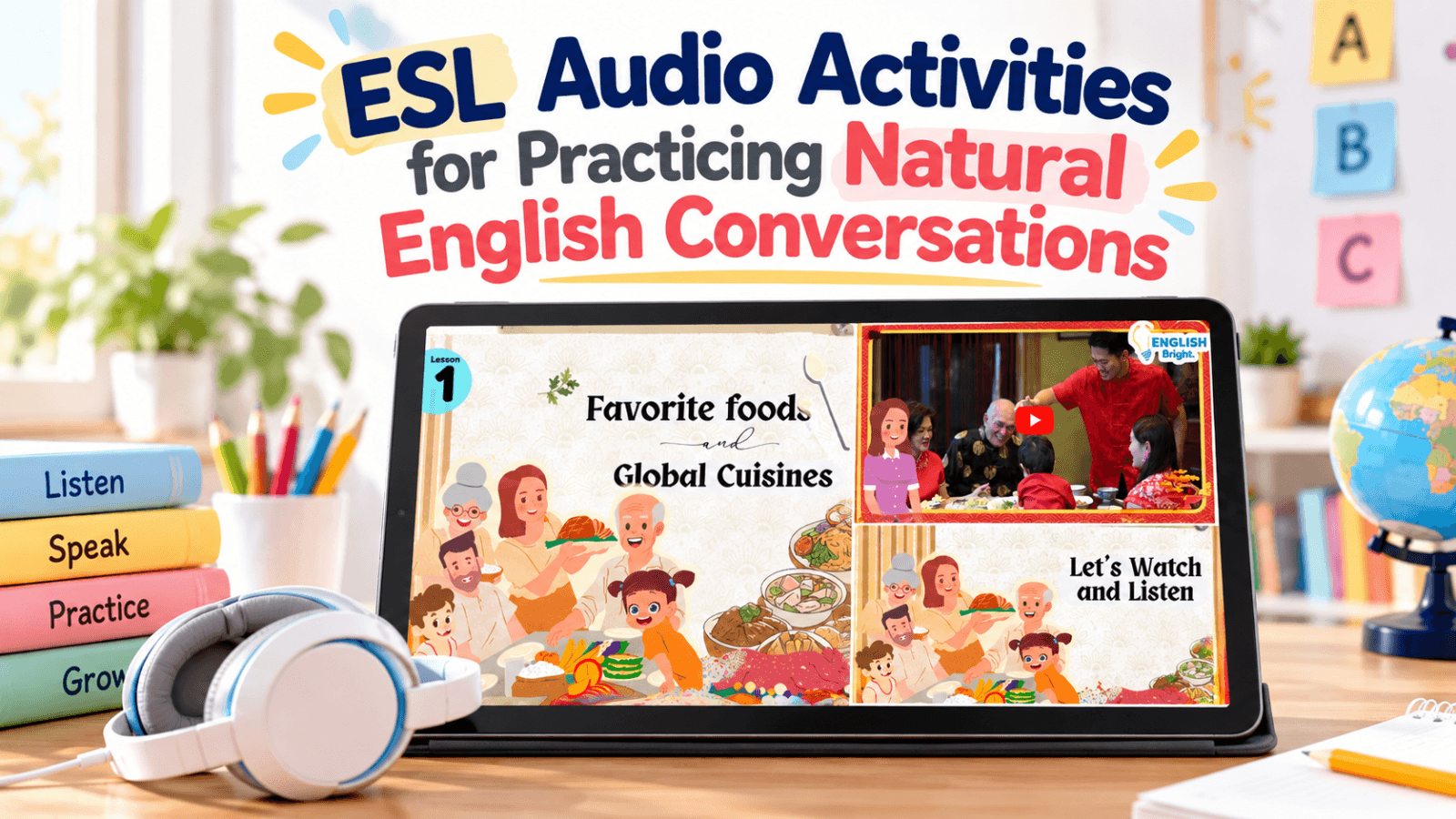
Learning English becomes more meaningful when students can understand and use the language in real-life situations. While vocabulary and grammar are important, learners also need opportunities to hear natural conversations, recognize common expressions, and practice speaking confidently. This is where ESL audio activities become valuable tools for English teachers.
Audio-based lessons help students develop listening comprehension, improve pronunciation, and become familiar with the rhythm and intonation of spoken English. Instead of simply memorizing words, learners can hear how people communicate in everyday situations, such as greeting friends, ordering food, discussing hobbies, or learning about cultural traditions.
Whether teachers are introducing easy English audio lessons to beginners or using more advanced conversations with older students, listening activities can make English lessons more interactive and practical.
With English Bright ESL, teachers can explore interactive English lessons that combine vocabulary, listening, speaking, dialogues, and cultural learning. These ready-to-teach resources help students connect classroom English with real-world communication.
Why ESL Audio Activities Are Important for English Learners
Listening is an essential part of learning any language. Before students can respond naturally in English, they need to become familiar with how words and sentences sound in everyday conversations.
ESL audio activities give students opportunities to hear correct pronunciation, understand sentence patterns, and recognize expressions commonly used by English speakers.
Regular listening practice can help learners:
- Improve English listening comprehension.
- Recognize familiar words in spoken conversations.
- Develop clearer pronunciation and natural intonation.
- Understand questions and respond appropriately.
- Build confidence when speaking English.
- Learn useful expressions for everyday communication.
For beginners, basic English listening exercises might involve identifying familiar vocabulary or repeating short sentences. More advanced learners can practice understanding longer dialogues, identifying important details, and expressing opinions about what they hear.
The goal is to help students move from recognizing individual English words to understanding complete conversations.
1. Practice Everyday Conversations With ESL Audio
One effective way to develop communication skills is to introduce students to conversations they may experience outside the classroom.
Teachers can use short audio dialogues featuring situations such as meeting someone new, visiting a restaurant, shopping, traveling, or talking about daily routines.
For example, students can listen to a simple conversation:
Person A: “Excuse me, could you tell me where the nearest café is?”
Person B: “Of course! It’s just around the corner.”
Person A: “Thank you so much!”
Person B: “You’re welcome!”
After listening, teachers can ask comprehension questions or encourage students to practice the conversation with a partner.
For more advanced learners, teachers can introduce alternative expressions and discuss when certain phrases sound more natural or polite.
These activities help students understand how English is used in authentic social situations.

2. Improve Pronunciation Through Listen-and-Repeat Activities
Listen-and-repeat exercises are among the simplest ways to incorporate ESL audio into online English classes.
Students listen to a word, phrase, or sentence and repeat what they hear. This allows them to focus on pronunciation, word stress, and sentence rhythm.
Teachers can begin with short expressions such as:
- “How was your weekend?”
- “That sounds interesting!”
- “Could you say that again?”
- “I’d love to try that.”
- “What do you think about it?”
For younger learners, repetition activities can focus on familiar vocabulary and simple sentence patterns.
For older or more advanced students, teachers can introduce longer expressions and encourage learners to imitate natural intonation.
An effective variation is the shadowing technique, where students repeat a phrase immediately after hearing it or speak along with the recording.
This helps learners develop smoother speech and become more comfortable using English in conversations.
3. Explore Cultural Traditions With English Bright ESL Cultural Lessons
Learning English is not only about understanding vocabulary and grammar. It also involves discovering how people communicate, celebrate, and interact across different cultures.
One engaging way to combine language learning with cultural awareness is through the cultural celebration lessons available on English Bright ESL.
These lessons introduce students to holidays, traditions, celebrations, and customs from different parts of the world. Teachers can use cultural topics to create meaningful listening and speaking activities while helping learners understand how English connects with everyday experiences.
Learn English Through Holidays and Cultural Traditions
With English Bright ESL’s interactive lessons, teachers can introduce cultural topics such as:
- Christmas: Explore holiday greetings, family traditions, decorations, and celebrations.
- Thanksgiving: Learn vocabulary about gratitude, food, family gatherings, and traditions.
- Halloween: Practice seasonal vocabulary and discuss costumes, activities, and celebrations.
- New Year: Talk about celebrations, goals, resolutions, and traditions around the world.
- Other cultural celebrations: Discover how different communities celebrate meaningful occasions.
Teachers can extend these cultural lessons with ESL audio activities by reading or playing short dialogues, asking listening comprehension questions, and encouraging students to discuss their own experiences.
For example, during a lesson about New Year celebrations, students might practice this conversation:
Teacher: “How do people celebrate New Year in your country?”
Student: “We usually celebrate with our family and enjoy a special meal.”
Teacher: “That sounds wonderful! Do you have any special traditions?”
Student: “Yes! We watch fireworks and wish everyone a happy New Year.”
This activity encourages learners to practice natural conversations while sharing cultural experiences.
Why Cultural Lessons Improve English Communication
Cultural lessons give students meaningful reasons to use English.
Instead of answering isolated grammar questions, learners can describe traditions, compare celebrations, express preferences, and ask follow-up questions.
For advanced students, teachers can expand cultural discussions with questions such as:
- “How are celebrations in your country different from those in other countries?”
- “Why do you think cultural traditions are important?”
- “Which international celebration would you like to experience?”
- “How have holiday traditions changed over time?”
These discussions develop listening comprehension, critical thinking, and conversational fluency.
English Bright ESL cultural lessons make it easier for teachers to connect language practice with interesting, real-world topics while reducing lesson preparation time.

4. Use ESL Audio Stories to Develop Listening Comprehension
Stories are another effective way to help students understand spoken English in context.
Through storytelling, learners hear vocabulary, sentence structures, and expressions used naturally.
For beginners, teachers can use short stories with simple language and familiar characters. English audio lessons for kids can include stories about animals, family, school, or everyday adventures.
After listening, students can answer questions such as:
- “Who are the characters?”
- “Where does the story happen?”
- “What happened first?”
- “What did the characters learn?”
For advanced learners, teachers can introduce longer stories and encourage students to summarize events, describe characters, or explain the message of the story.
Listening to stories also helps learners understand how spoken English communicates emotions, actions, and ideas.
5. Make ESL Listening Practice Interactive With Games
Listening practice becomes more enjoyable when students actively participate instead of simply hearing a recording.
Teachers can turn ESL listening practice for beginners into interactive games that encourage concentration and quick responses.
Listen and Choose
Play or read a sentence and ask students to select the correct picture or answer.
Listen and Complete
Students listen to a short conversation and fill in missing words or expressions.
Guess the Situation
Play or perform a short dialogue and ask students to identify where the conversation is happening.
Listen and Respond
Students hear a question and provide an appropriate response without reading a prepared answer.
These activities can be adapted for different age groups and proficiency levels.
For kindergarten and elementary learners, teachers can use pictures, simple vocabulary, and short instructions. For advanced students, listening games can include longer conversations, implied meanings, and natural expressions.
6. Adapt ESL Audio Lessons for Different Learning Levels
Not every student needs the same listening activities. Teachers should select audio materials based on learners’ ages, interests, and English proficiency.
For kindergarten students, English listening practice for kindergarten should focus on short instructions, familiar words, songs, and repetition.
For elementary learners, ESL audio lessons for elementary students can introduce short conversations, vocabulary recognition, and simple comprehension questions.
ESL audio activities for young learners are especially effective when combined with colorful pictures, interactive exercises, and familiar topics.
For teens and adults, teachers can introduce more complex conversations involving travel, work, cultural differences, social situations, and personal opinions.
English Bright ESL offers lessons across different learning levels, allowing teachers to select activities appropriate for their students.
Its Level 6 lessons are particularly relevant for older learners who want to strengthen practical communication skills through everyday conversations, discussion topics, and more challenging language activities.
7. Encourage Students to Speak After Listening
Listening activities are most effective when students have opportunities to use the language they hear.
After completing an audio exercise, teachers can encourage learners to practice the same expressions through role-play, question-and-answer activities, or open discussions.
For example, after listening to a restaurant conversation, students can take turns acting as customers and restaurant staff.
After exploring a cultural lesson, students can describe a celebration in their country or compare traditions with those from another culture.
This approach helps students move beyond passive listening and develop practical speaking skills.
When students regularly learn English with audio lessons and follow up with meaningful conversations, they gain confidence using English independently.

Make ESL Audio Lessons More Interactive With English Bright ESL
Effective ESL audio activities do more than improve listening comprehension. They help students understand natural conversations, practice pronunciation, discover useful expressions, and communicate more confidently.
From basic listening exercises and interactive games to real-life dialogues and cultural discussions, audio-based learning provides opportunities for students of different ages and proficiency levels.
With English Bright ESL, teachers can make these activities more engaging through ready-to-teach interactive lessons, vocabulary practice, sentence patterns, dialogues, stories, and cultural celebration resources.
The platform’s cultural lessons are especially valuable for connecting English learning with real-world traditions and meaningful conversations. Students can explore how people celebrate holidays, express their opinions, and discuss similarities and differences between cultures.
Whether teaching young beginners or advanced Level 6 learners, teachers can create lessons that develop both listening comprehension and natural speaking skills.
Less prep. More teaching. More meaningful English conversations.
Explore English Bright ESL’s interactive lessons and cultural learning resources and bring engaging listening and speaking activities into your next ESL class.



Leave a Reply