
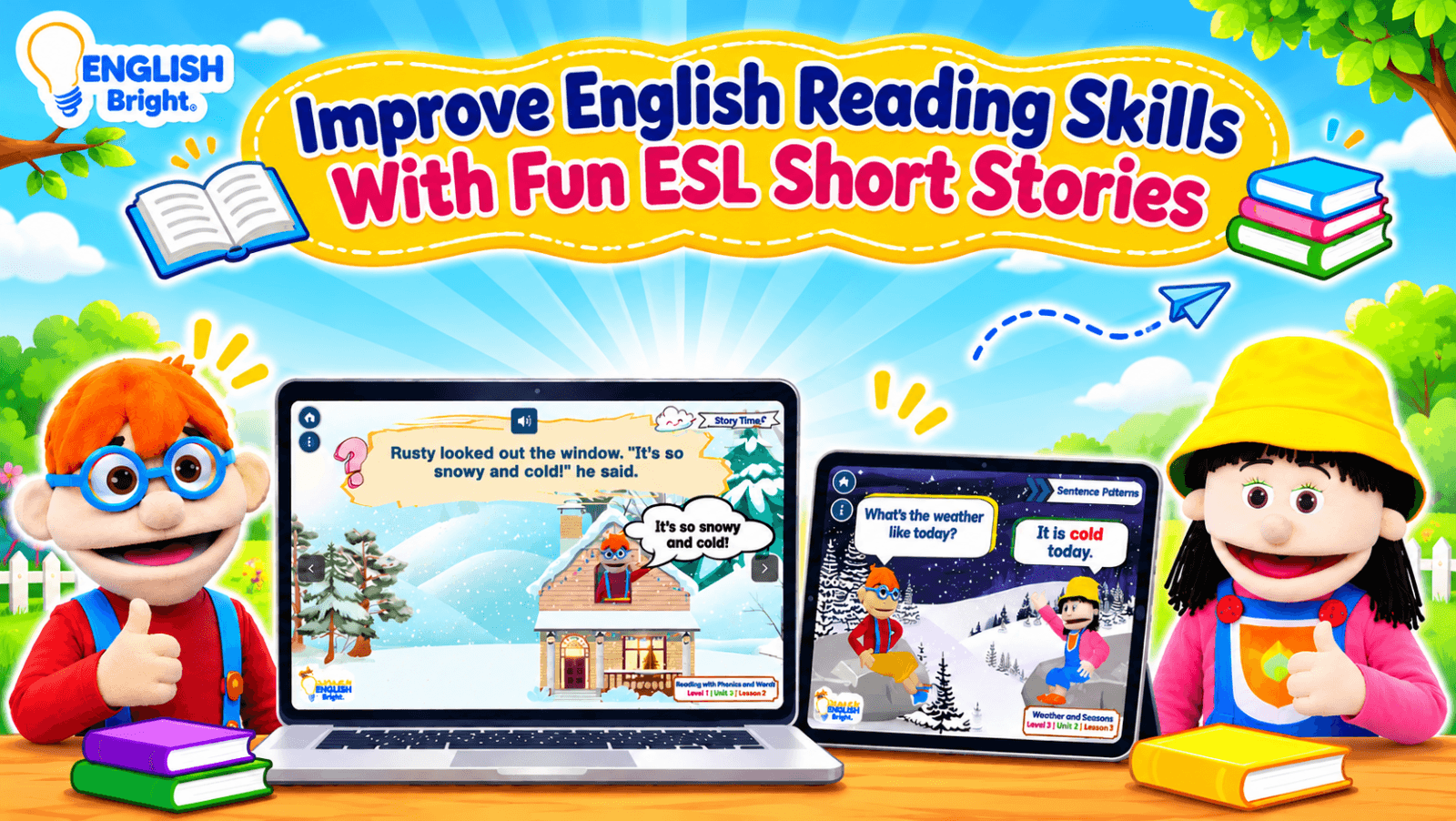
Reading is one of the most important skills for students learning English. However, beginner learners may find long passages, unfamiliar vocabulary, and complicated sentences difficult to understand. This is why short stories for ESL students are an excellent way to make reading practice more enjoyable, accessible, and meaningful.
Short stories introduce English through interesting characters, familiar situations, and simple conversations. Instead of memorizing individual words, students discover how vocabulary and sentence patterns work together in real-life contexts.
For ESL teachers, incorporating easy English stories for ESL students into lessons creates opportunities to develop reading comprehension, vocabulary, pronunciation, and speaking confidence.
With English Bright ESL, teachers can explore interactive story lessons that combine reading activities, colorful visuals, and comprehension practice to help students become more confident English readers.
In this article, we’ll explore how short stories support English learning and share practical ways to make reading lessons more engaging for beginners and young learners.
Why Short Stories Are Effective for ESL Students
Learning to read in a new language takes time and consistent practice. Students need opportunities to recognize words, understand sentence structures, and connect ideas.
Short English stories for beginners make this process easier by presenting language in manageable sections.
Unlike lengthy reading passages, short stories allow students to focus on understanding the main idea without feeling overwhelmed.
Here are several benefits of using short stories in ESL classes:
- Build vocabulary naturally: Students encounter new words within meaningful sentences.
- Improve reading comprehension: Stories help learners identify characters, settings, events, and important details.
- Develop sentence recognition: Repeated sentence patterns reinforce basic English grammar.
- Encourage speaking practice: Students can discuss characters, answer questions, and retell events.
- Increase reading confidence: Completing a short story gives learners a sense of achievement.
When teachers regularly introduce short stories for English learners, students can gradually develop stronger reading habits while enjoying the learning process.

Start With Short English Stories for Beginners
Choosing the right reading material is essential, especially when teaching students who are just beginning to recognize English words and sentences.
English reading stories for beginners should include familiar vocabulary, clear illustrations, and simple sentence structures.
For example, a story about a child’s daily routine might include:
Anna wakes up early. She eats breakfast with her family. Then, she goes to school. Anna likes reading books with her friends.
This short passage introduces common verbs such as wake up, eat, go, and like while reinforcing simple present-tense sentences.
After reading, teachers can ask:
- What does Anna do in the morning?
- Who does Anna eat breakfast with?
- Where does Anna go?
- What does Anna like doing?
These questions encourage students to understand the story rather than simply read the words aloud.
For younger learners, simple English stories for kids with colorful illustrations can make unfamiliar vocabulary easier to recognize and remember.
Use ESL Short Stories With Questions to Improve Comprehension
Reading comprehension is more than recognizing words. Students must also understand what they read and identify important information.
Using ESL short stories with questions allows teachers to check understanding while encouraging students to think about the story.
Ask Questions Before Reading
Before introducing a story, show students an illustration or the story title.
Ask simple prediction questions such as:
- What animals can you see?
- Where do you think the story happens?
- What do you think will happen next?
These activities activate students’ existing vocabulary and encourage curiosity.
Ask Questions During Reading
Pause occasionally to check understanding.
For example:
- Who is the main character?
- What is happening now?
- How does the character feel?
Short questions help students follow the story and understand the sequence of events.
Ask Questions After Reading
After finishing the story, introduce comprehension activities such as multiple-choice questions, true-or-false statements, and sentence completion.
Teachers can also ask students to describe their favorite part or explain what happened at the end.
These activities make ESL reading comprehension stories more interactive while helping learners practice expressing ideas in English.

Make Reading More Engaging With English Bright ESL Story Lessons
One challenge ESL teachers often face is finding reading materials that are appropriate for their students’ language levels while remaining interesting and engaging.
English Bright ESL helps teachers simplify lesson preparation with ready-to-teach interactive English lessons, including story-based learning activities.
Instead of relying only on traditional reading worksheets, teachers can introduce digital stories that encourage students to read, listen, answer questions, and participate.
Explore Interactive Story Lessons
English Bright ESL provides structured learning resources designed to support vocabulary development, reading comprehension, and speaking practice.
Teachers can use its story lessons to help students:
- Read English sentences in meaningful contexts.
- Recognize familiar vocabulary and sentence patterns.
- Follow story events using colorful illustrations.
- Answer reading comprehension questions.
- Practice speaking by discussing characters and events.
- Review important words and expressions.
For example, teachers can introduce an English Bright ESL story featuring characters such as Marla, Rusty, or Cora.
Students can follow the characters’ adventures, identify new vocabulary, and answer questions about what happens throughout the story.
These activities help transform reading practice into an interactive learning experience.
Explore English Bright ESL interactive lessons to discover ready-to-teach resources for online and in-person English classes.
Teach Vocabulary Through Short Stories for English Learners
Stories provide a natural way to introduce vocabulary because students see how words are used in meaningful situations.
Instead of teaching isolated vocabulary lists, teachers can select important words from a story and explain them using pictures, actions, or simple examples.
For instance, a story about visiting a park might introduce:
- Playground: A place where children play.
- Swing: Something children sit on and move back and forth.
- Bench: A long seat found in parks.
- Picnic: A meal eaten outdoors.
- Run: To move quickly on your feet.
After introducing the words, students can find them in the story and practice using them in sentences.
Teachers can also create matching games, picture identification activities, and simple vocabulary quizzes.
Using short stories to learn English helps students understand how vocabulary connects to everyday experiences.
Encourage Speaking Through Story Retelling
Reading and speaking are closely connected. When students understand a story, they can begin using its vocabulary and sentence patterns in their own conversations.
Story retelling is an effective activity for ESL beginners because it encourages students to organize ideas and communicate using familiar language.
Start by asking students to describe what happened at the beginning, middle, and end of the story.
Provide simple sentence starters such as:
- First, the character…
- Next, they…
- After that…
- Finally…
Beginners can retell the story using pictures and short sentences, while more advanced learners can add details and describe characters’ feelings.
Teachers can also introduce role-playing activities where students act as characters and practice conversations from the story.
These activities turn short stories for ESL students into opportunities for meaningful English communication.
Use Pictures and Interactive Activities for Young Learners
Visual learning is especially helpful when teaching English stories for young learners.
Pictures allow students to connect unfamiliar English words with recognizable objects, characters, and actions.
For example, when reading a story about animals, teachers can display illustrations of a rabbit, elephant, lion, or monkey.
Students can identify the animals, describe their appearance, and predict what they might do.
To make lessons more engaging, teachers can include:
- Picture sequencing: Arrange story illustrations in the correct order.
- Character matching: Match characters with their actions.
- Missing-word activities: Complete sentences using vocabulary from the story.
- True-or-false games: Identify correct and incorrect story details.
- Role-play: Practice conversations between story characters.
These activities help students remain actively involved while reinforcing reading comprehension and vocabulary.
With English Bright ESL’s interactive learning resources, teachers can combine visual activities, stories, and comprehension practice in one structured learning experience.
Build Consistent Reading Habits With Short ESL Stories
Developing strong English reading skills requires regular practice.
Instead of introducing lengthy passages occasionally, teachers can incorporate short reading activities into weekly lessons.
Even five to ten minutes of focused reading practice can provide useful opportunities for vocabulary review and comprehension development.
A simple reading routine might include:
- Introduce vocabulary: Review important words before reading.
- Read the story: Encourage students to follow the text and listen carefully.
- Check comprehension: Ask questions about characters and events.
- Practice speaking: Let students describe or retell the story.
- Review vocabulary: Reinforce important words through interactive activities.
As students become more confident, teachers can gradually introduce longer stories, more complex sentences, and additional comprehension questions.
Consistent exposure to short stories for ESL beginners can help students build the foundation needed for more independent English reading.

Bring English Stories to Life With English Bright ESL
Teaching English reading skills doesn’t have to involve long passages or repetitive worksheets.
With the right activities, short stories for ESL students can make reading lessons enjoyable while helping learners develop vocabulary, comprehension, pronunciation, and speaking confidence.
From short English stories for beginners to interactive reading comprehension activities, stories provide meaningful opportunities for students to practice English in context.
By combining storytelling, illustrations, comprehension questions, and speaking activities, teachers can create lessons that encourage students to participate and develop stronger reading habits.
English Bright ESL makes this easier with structured, ready-to-teach interactive lessons designed for different learning levels.
Whether you’re teaching beginners, young children, or students in online English classes, English Bright ESL provides engaging resources that help make reading practice more interactive and enjoyable.
Explore English Bright ESL lessons today and bring fun, interactive English stories into your next ESL class.
Less prep. More teaching.


Leave a Reply