
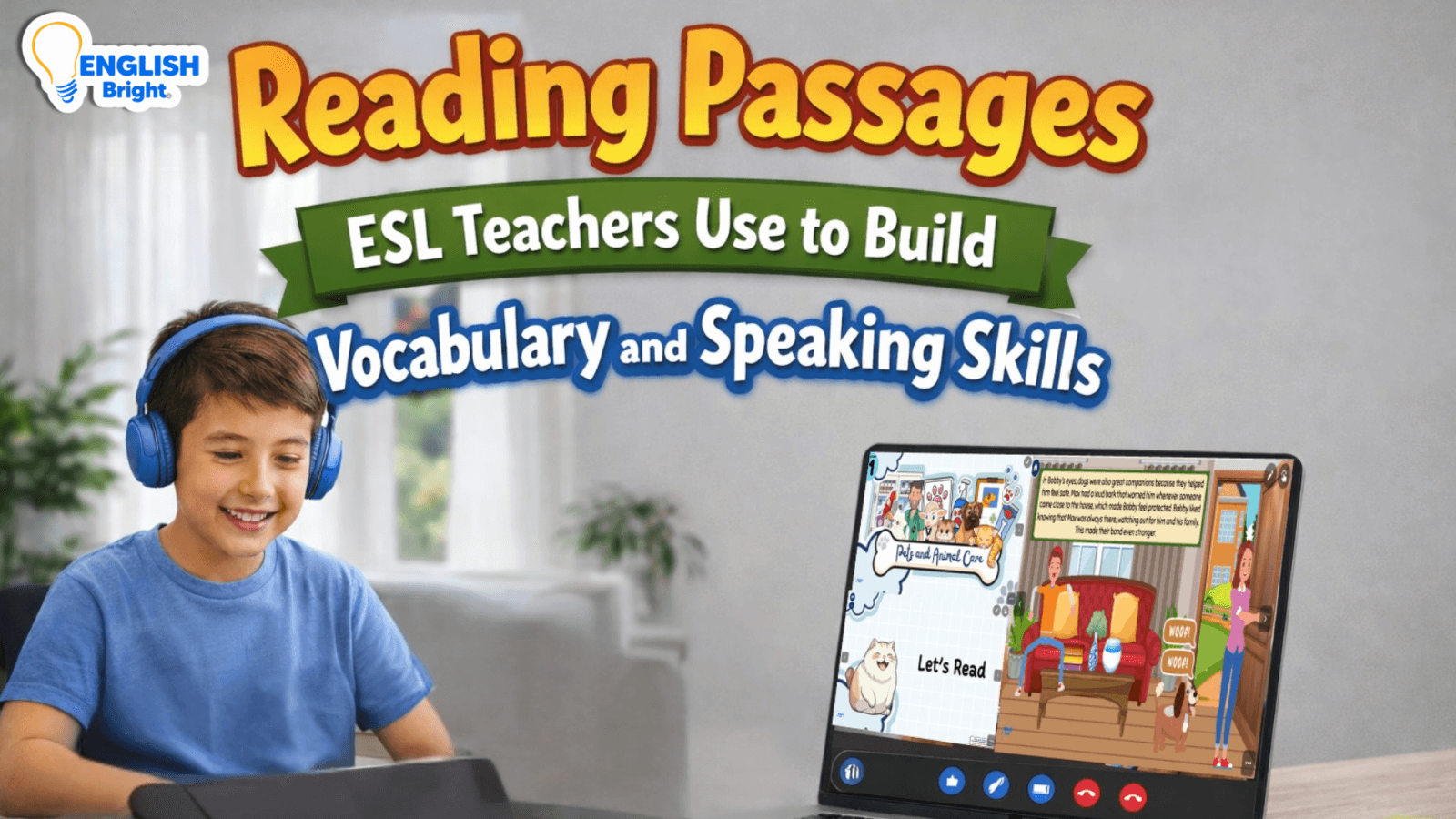
Reading is one of the most powerful tools in language learning. For ESL students, reading passages help build vocabulary, improve pronunciation, and develop the confidence needed for real conversations. When teachers choose the right reading passages ESL learners can understand, students move beyond memorizing words and begin using English naturally.
Many teachers search for easy ESL reading passages that are engaging and structured. However, effective reading materials should do more than help students decode words. The best ESL passages for reading connect vocabulary, grammar, and speaking practice so students can actively use the language they learn.
In this article, we will explore how reading passages support ESL learning, what makes them effective, and how teachers can use them to strengthen both vocabulary and speaking skills.
Why Reading Passages Are Essential in ESL Learning
Reading passages play a key role in language development. While vocabulary lists and flashcards introduce new words, reading passages show how those words function in real sentences.
When ESL students read regularly, they develop several important skills:
Vocabulary Expansion
Students see new words used in meaningful context instead of isolated lists.
Sentence Structure Awareness
Reading helps learners understand how English sentences are naturally formed.
Improved Pronunciation
Reading aloud encourages students to practice pronunciation and rhythm.
Speaking Confidence
When students understand what they read, they feel more comfortable discussing the topic.
For teachers, reading ESL materials provide an opportunity to guide students through structured language practice. A well-designed passage introduces vocabulary, reinforces grammar patterns, and encourages conversation.

What Makes Effective ESL Reading Passages
Not all reading materials are equally effective for ESL students. Some texts are too complex, while others lack meaningful language practice.
The best ESL passages for reading share several important characteristics.
1. Clear Vocabulary Focus
Strong ESL reading passages introduce a small group of target words. Students should encounter these words multiple times throughout the passage.
This repetition helps learners remember new vocabulary naturally.
For example, a lesson about animals might focus on words such as:
- pet
- canine
- feline
- aquarium
Seeing these words repeatedly helps students connect meaning with context.
2. Simple Sentence Patterns
Students learn faster when sentences follow clear and predictable patterns. This is especially important when working with easy ESL reading passages for beginner or young learners.
For example:
- Max has a pet dog.
- A dog is a canine animal.
- Cats are feline animals.
- Fish live in an aquarium.
These simple patterns make it easier for students to understand the story and practice speaking afterward.
3. A Story That Encourages Discussion
Stories make reading more engaging. When passages include characters, situations, and simple problems, students become more interested in the lesson.
After reading, teachers can ask questions that encourage speaking practice:
- What pet does Max have?
- Do you have a pet?
- How do you care for animals?
These questions help transform reading into conversation practice.
Turning Reading Passages into Speaking Activities
Many teachers stop after students finish reading a passage. However, the real learning happens when reading transitions into speaking practice.
Here are several ways teachers can extend reading passages ESL activities into interactive lessons.
Retelling the Story
Students can retell the story in their own words.
Example:
“Max is a dog. He is a pet. The family takes care of him.”
This helps students practice vocabulary and sentence structure.
Role-Playing Conversations
Teachers can turn the passage into a short conversation.
Example:
Teacher: “Do you have a pet?”
Student: “Yes, I have a dog.”
Teacher: “Is your dog a canine?”
Student: “Yes, it is.”
Role-play makes learning more dynamic and encourages confidence in speaking.
Vocabulary Expansion
Teachers can ask students to name other animals and classify them.
Example:
- Dog – canine
- Cat – feline
- Fish – aquarium pet
- Bird – pet
Students can then describe how to care for these animals.

The Importance of Structured Reading Lessons
Many teachers search online for easy ESL reading passages, but random materials often lack structure. When lessons follow a clear system, students progress faster.
Structured reading lessons usually include:
- Vocabulary introduction
- Reading passage
- Pronunciation practice
- Comprehension questions
- Speaking activities
This sequence ensures students move from recognition to active language use.
Programs like English Bright ESL are designed with this structure in mind. Lessons guide students through vocabulary, reading, grammar, phonics, and speaking practice so language development happens naturally.
Instead of isolated activities, each lesson builds on previous knowledge and prepares students for the next level.
Why Reading Passages Help ESL Students Gain Confidence
Confidence is one of the biggest challenges ESL learners face. Many students understand English but feel nervous about speaking.
Reading passages help overcome this challenge in several ways.
Familiar Vocabulary
Students read words they have already learned, which builds confidence.
Predictable Sentence Patterns
Simple structures help students form sentences more easily.
Topic-Based Learning
When lessons focus on familiar topics like pets, family, or food students feel comfortable sharing their ideas.
Over time, this combination of reading and speaking practice helps students communicate more naturally.
Using Reading Passages in Online ESL Classes
Online ESL teaching has become increasingly popular. Teachers working online often need ESL passages for reading that are easy to display and interactive for students.
In an online class, teachers can:
- Share the passage on screen
- Read together with students
- Highlight vocabulary words
- Ask comprehension questions
- Encourage students to read aloud
Interactive reading activities keep students engaged and improve their speaking confidence during virtual lessons.

Choosing the Right Reading Passages for Your Students
When selecting reading passages ESL teachers can use effectively, it is important to consider several factors.
Student Age
Young learners benefit from short stories and simple vocabulary.
Language Level
Beginners need shorter sentences and repeated vocabulary.
Lesson Goals
Teachers should choose passages that reinforce the lesson topic.
Speaking Opportunities
Good reading passages should naturally lead into conversation.
When these elements are combined, reading becomes a powerful learning tool.
Final Thoughts
Reading passages are more than just comprehension exercises. They are an essential part of helping ESL students build vocabulary, understand sentence structure, and develop speaking confidence.
Well-designed reading passages ESL teachers use should include clear vocabulary, simple sentence patterns, and meaningful discussion topics. When students read about familiar themes like pets and animal care they become more engaged and willing to speak.
By using easy ESL reading passages that connect reading, vocabulary, and conversation, teachers create lessons that are both enjoyable and effective.
Structured systems like English Bright ESL take this approach even further by combining vocabulary, reading, grammar, phonics, and speaking practice into a consistent learning pathway.
With the right reading passages and teaching strategies, students can move from recognizing words to expressing their thoughts confidently in English.

Leave a Reply