
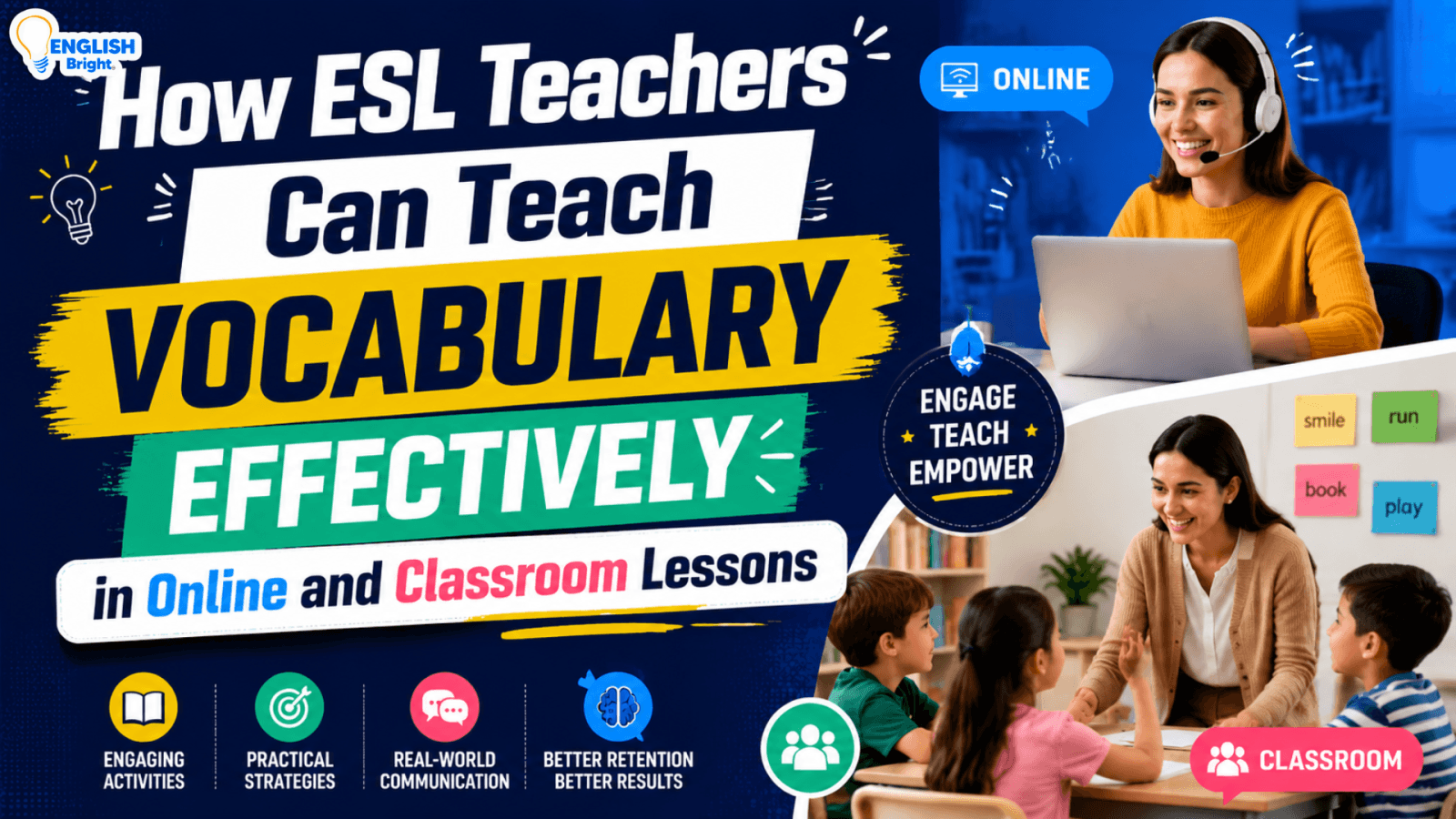
Vocabulary is the foundation of every language, and for ESL learners, it directly affects speaking confidence, reading comprehension, and overall communication ability. For teachers, understanding how to teach vocabulary effectively is one of the most important skills in both online and classroom environments.
Today’s ESL teaching is no longer limited to traditional classrooms. Many teachers now work in hybrid or fully online settings, which requires flexible strategies that still keep students engaged and learning effectively. In this guide, we will explore how ESL teachers teach vocabulary effectively in online and classroom settings, along with practical methods, activities, and tools you can use immediately.
Understanding Teaching Vocabulary Effectively in ESL Lessons
Before choosing activities or tools, ESL teachers need to understand what effective vocabulary teaching looks like. It is not just about memorizing word lists. Instead, it involves helping students:
- Understand meaning in context
- Pronounce words correctly
- Use vocabulary in real communication
- Retain and reuse words over time
This is why the best approach to how to teach vocabulary effectively in online ESL classes and face-to-face lessons is a combination of exposure, practice, and production.

Best Strategies for Teaching Vocabulary in ESL Online and Face-to-Face Classes
Whether teaching online or in a physical classroom, strong vocabulary instruction follows similar principles. Here are some of the most effective strategies for teaching vocabulary in ESL online and face-to-face classes:
1. Teach Words in Context
Instead of isolated word lists, introduce vocabulary through sentences, stories, or dialogues. This helps students understand natural usage.
2. Use Visual Support
Images, real objects, and gestures help learners connect meaning quickly, especially beginners.
3. Repeat and Recycle Vocabulary
Repetition is essential. Revisit previously learned words in new lessons to strengthen memory retention.
4. Encourage Active Use
Students should not only recognize words but also use them in speaking and writing activities.
These strategies apply to both physical and virtual classrooms, making them essential for every ESL teacher.
Teaching ESL Vocabulary Lessons in Both Online and Traditional Classrooms
One of the biggest challenges teachers faces is adapting lessons across different environments. Here’s how to successfully manage both:
In Classroom Settings
When teaching in person, ESL teachers can use:
- Flashcards and realia (real objects)
- Board games and group activities
- Pair work speaking tasks
- Physical movement activities (TPR)
These methods make effective in-person vocabulary lessons for ESL beginners more engaging and interactive.
In Online Settings
For virtual classrooms, teachers can rely on:
- Digital flashcards
- Interactive slides
- Screen-sharing games
- Online quizzes and polls
These methods are part of modern online ESL vocabulary teaching strategies for better student engagement, helping students stay focused even through a screen.

ESL Teachers Adapt Vocabulary Lessons for Online and Classroom Teaching
Flexibility is key when switching between teaching environments. Teachers must adjust not only tools but also delivery style.
In classrooms, interaction happens naturally through group energy. Online, teachers need to intentionally create interaction. This means:
- Asking more guided questions
- Using breakout rooms for pair work
- Encouraging students to speak frequently
- Keeping instructions short and clear
Understanding how ESL teachers adapt vocabulary lessons for online and classroom teaching ensures students receive the same learning quality regardless of format.
Keep ESL Students Engaged During Online Vocabulary Lessons
One of the biggest challenges in online teaching is attention span. To solve this, ESL teachers must design interactive and fast-paced lessons.
Effective techniques include:
- Using game-based learning activities
- Adding visual storytelling
- Giving immediate feedback
- Using rewards or point systems
Teachers who master how to keep ESL students engaged during online vocabulary lessons often see better participation and retention.
Digital tools also play a huge role here. Platforms with built-in games, flashcards, and interactive slides make lessons more dynamic and enjoyable.
Teaching Vocabulary Effectively in ESL Classroom Lessons
In traditional classrooms, vocabulary lessons become more powerful when they are active and social.
To improve engagement, teachers can use:
- Role-playing activities
- Vocabulary relay games
- Matching and sorting tasks
- Group storytelling exercises
These approaches represent some of the most communicative vocabulary teaching strategies for ESL classrooms, helping students practice real communication instead of memorization.
Classroom Vocabulary Activities for ESL Teachers to Boost Engagement
If you want your lessons to be more lively, here are proven classroom vocabulary activities for ESL teachers:
- Charades: Students act out words for others to guess
- Word Bingo: Reinforces recognition and recall
- Picture matching: Connect words with images
- Sentence building races: Encourage grammar and vocabulary use
These activities are especially effective for younger learners and beginners, making lessons more memorable and fun.

ESL Teachers Use Games to Teach Vocabulary in the Classroom
Games are not just for fun—they are powerful learning tools. When ESL teachers use games to teach vocabulary in the classroom, students naturally become more engaged and motivated.
Games help students:
- Practice without pressure
- Repeat vocabulary multiple times
- Learn through competition and collaboration
- Stay active during lessons
This makes games one of the most effective tools for vocabulary retention.
Make ESL Classroom Vocabulary Lessons More Interactive
To avoid passive learning, ESL teachers should always aim to make lessons interactive. Here are simple ways:
- Ask students to create their own sentences
- Use group challenges
- Include movement-based activities
- Let students teach vocabulary to each other
Interactive lessons increase confidence and help students remember words more effectively.
Digital Tools for Teaching Vocabulary in Online ESL Classes
Modern ESL teaching is supported by a wide range of digital tools. These tools make it easier to deliver engaging vocabulary lessons online:
- Interactive flashcard platforms
- Online quiz tools
- Virtual whiteboards
- Gamified learning apps
These tools help teachers implement interactive online vocabulary activities for ESL teachers, making lessons more dynamic and student-centered.
ESL Teachers Introduce New Vocabulary in Virtual Classrooms
Introducing vocabulary online requires clarity and structure. Teachers should:
- Show visuals before explaining meaning
- Use simple sentences
- Model pronunciation clearly
- Check understanding frequently
This ensures students can follow along even in a remote learning environment.
Effective Vocabulary Teaching Methods for ESL Teachers in Different Learning Environments
The most successful ESL teachers combine multiple approaches:
- Visual learning
- Auditory repetition
- Speaking practice
- Interactive games
These effective vocabulary teaching methods for ESL teachers in different learning environments ensure that students learn, understand, and use new language naturally.

A Smarter Way to Teach Vocabulary
Whether you are teaching online or in a classroom, the key to success is engagement, repetition, and communication. Strong vocabulary instruction is not about memorization—it is about helping students use language confidently in real situations.
This is where English Bright ESL interactive lessons become a powerful solution for teachers. With ready-made interactive materials, built-in games, speaking activities, flashcards, and structured lesson flows, teachers can easily deliver high-quality vocabulary lessons without spending hours preparing.
Instead of switching between different tools and resources, English Bright ESL provides a complete teaching system designed for both online and classroom use. It helps ESL teachers save time, increase student engagement, and deliver more effective vocabulary lessons across all learning environments.
With the right strategies—and the right tools—teaching vocabulary becomes simpler, faster, and far more effective.


Leave a Reply