
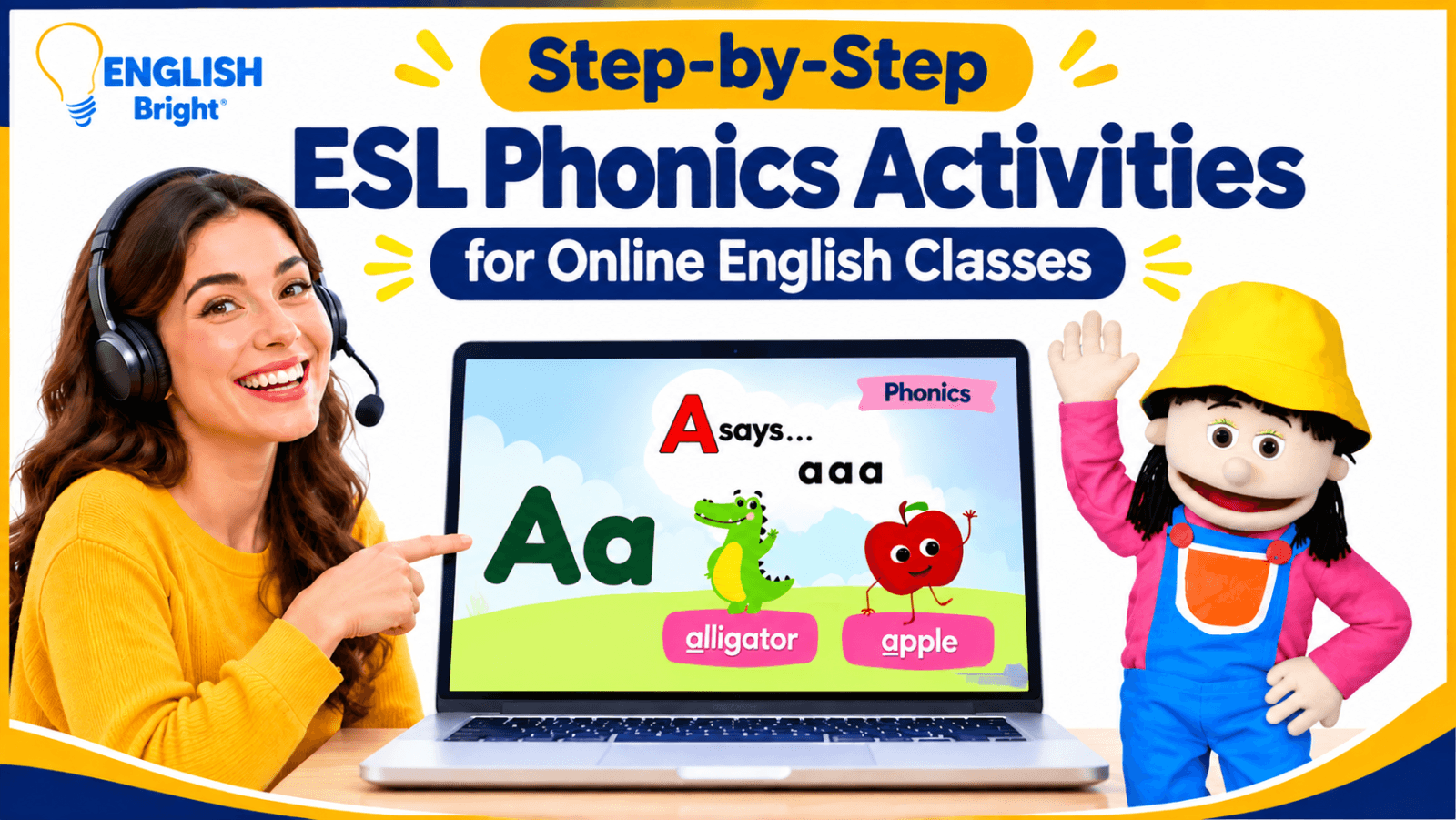
Teaching ESL phonics is one of the most effective ways to help beginner English learners recognize letter sounds, pronounce words correctly, and develop early reading skills. For young learners, understanding how letters and sounds work together creates a strong foundation for reading, spelling, listening, and speaking English.
However, teaching phonics in an online classroom can be challenging. Students need more than simply repeating letters and sounds. They need colorful visuals, interactive activities, guided pronunciation practice, and opportunities to apply what they learn.
This is where interactive ESL phonics lessons can make a difference.
With a structured approach and engaging digital resources, ESL teachers can turn basic phonics exercises into enjoyable learning experiences.
In this guide, we’ll explore step-by-step ESL phonics activities for online English classes and discover how English Bright ESL helps teachers deliver engaging, ready-to-teach phonics lessons for beginners and young learners.
Why ESL Phonics Is Important for Beginner English Learners
Phonics teaches students the relationship between written letters and spoken sounds. Instead of memorizing every English word individually, students learn how to recognize, blend, and pronounce sounds to read unfamiliar words.
For students learning English as a second language, phonics instruction supports several essential language skills.
Benefits of teaching phonics to ESL students include:
- Improved pronunciation: Students learn to recognize and produce individual English sounds.
- Better reading skills: Learners practice blending sounds to decode simple words.
- Stronger spelling abilities: Students begin connecting spoken sounds with written letters.
- Improved listening skills: Phonics activities help learners distinguish similar sounds.
- Greater reading confidence: Students become more independent when reading unfamiliar words.
Effective phonics lessons for beginners should introduce sounds gradually, provide plenty of repetition, and allow students to practice through engaging activities.

Step 1: Introduce Letter Sounds With Pictures and Audio
The first step in teaching English phonics for kids is helping students connect letters with their corresponding sounds.
Begin with familiar letters and simple vocabulary.
For example:
- A – /æ/ – apple, ant
- B – /b/ – ball, banana
- C – /k/ – cat, cup
- D – /d/ – dog, duck
- M – /m/ – moon, monkey
Show students a letter alongside a colorful picture. Say the sound clearly and encourage students to repeat it.
Teachers should emphasize the letter sound rather than focusing only on the letter name.
For example, when introducing the letter B, demonstrate the /b/ sound and ask students to identify words beginning with that sound.
Make Letter Sounds Interactive
Instead of simply displaying flashcards, encourage students to participate.
Try these activities:
- Show a picture and ask students to identify its beginning sound.
- Say a sound and ask students to choose the correct letter.
- Display two pictures and ask which one begins with /b/.
- Let students repeat the sound and use the word in a simple sentence.
English Bright ESL phonics lessons include colorful visual materials and interactive activities that help teachers introduce letter sounds in a structured, beginner-friendly way.
These ready-to-use resources make online phonics instruction more engaging while reducing lesson preparation time.
Step 2: Practice Beginning and Ending Sounds
Once students recognize individual letter sounds, introduce activities that help them identify sounds at the beginning and end of words.
This is an important stage in developing phonemic awareness and early decoding skills.
Beginning Sounds Activity
Show students three pictures:
- Cat
- Dog
- Car
Ask:
Which two words begin with the same sound?
Students identify cat and car because both begin with /k/.
Ending Sounds Activity
Introduce simple words such as:
- Cat
- Hat
- Sun
- Pen
Ask students to listen carefully and identify the final sound in each word.
For example, cat and hat both end with /t/.
These ESL phonics practice activities help students pay attention to individual sounds and prepare them for blending and reading simple words.
For online classes, teachers can use digital flashcards, picture-matching exercises, and interactive slides to keep students actively involved.

Step 3: Teach Sound Blending With Simple CVC Words
After students become familiar with individual sounds, the next step is teaching them how to blend sounds together.
Blending is an essential phonics skill because it allows learners to read words rather than memorize them.
Start with simple consonant-vowel-consonant (CVC) words.
| Word | Individual Sounds | Blended Word |
| Cat | /k/ /æ/ /t/ | cat |
| Dog | /d/ /ɒ/ /ɡ/ | dog |
| Sun | /s/ /ʌ/ /n/ | sun |
| Pen | /p/ /ɛ/ /n/ | pen |
| Map | /m/ /æ/ /p/ | map |
Interactive Sound Blending Activity
Display the letters C, A, and T separately.
Guide students through the following steps:
- Say each sound slowly.
- Ask students to repeat the individual sounds.
- Gradually blend the sounds together.
- Encourage students to pronounce the complete word.
- Show a picture of a cat to reinforce meaning.
Repeat this process using other familiar CVC words.
With English Bright ESL interactive phonics lessons, teachers can incorporate sound recognition, word-building exercises, and visual learning activities into their online classes.
This structured approach helps beginners move from recognizing sounds to reading complete words.
Step 4: Introduce Word Families and Rhyming Activities
Word families help students recognize common spelling patterns and understand how changing one sound can create a new word.
For example:
-at word family
- Cat
- Bat
- Hat
- Mat
- Rat
-an word family
- Can
- Fan
- Man
- Pan
- Van
Teachers can introduce one word family at a time and encourage students to read the words aloud.
Fun Word Family Game
Display several words on the screen and ask students to find the words that rhyme.
For example:
Which word rhymes with cat?
A. Dog
B. Hat
C. Sun
Students select hat.
These simple phonics activities for young learners reinforce sound patterns, improve pronunciation, and help students recognize familiar spelling combinations.
Teachers can also encourage students to create their own rhyming words or identify word families in short reading passages.

Step 5: Use Interactive Phonics Games for Online Classes
Young learners often learn best when they can actively participate rather than simply watch a lesson.
Interactive games transform repetitive phonics exercises into enjoyable learning experiences.
Here are several engaging ESL phonics activities for online English classes.
Sound Matching Game
Display a letter and several pictures. Ask students to identify which picture begins with the target sound.
Missing Letter Challenge
Show a simple word with one missing letter.
Example:
C _ T
Students identify the missing letter A to complete cat.
Listen and Choose
Say a word aloud and display three possible answers. Students listen carefully and select the correct word.
Phonics Word Building
Provide students with individual letters and guide them through combining sounds to create simple words.
These games encourage participation, listening comprehension, and repeated pronunciation practice.
English Bright ESL offers interactive digital lessons, games, and phonics activities that teachers can use during live online classes.
Instead of preparing separate materials for every activity, teachers can follow structured lessons that combine vocabulary, pronunciation, and engaging practice exercises.
Step 6: Connect Phonics With Reading Practice
Learning individual sounds is only the beginning. Students also need opportunities to apply their phonics knowledge when reading words and sentences.
Start with short, decodable sentences using sound patterns students have already learned.
Examples:
- The cat sat.
- A dog can run.
- The sun is hot.
- The hen is red.
Ask students to identify familiar sounds, blend words, and read each sentence aloud.
For additional practice, introduce short phonics-based stories containing repeated spelling patterns.
Teachers can also combine phonics with sight word instruction, helping students recognize frequently used words while continuing to develop decoding skills.
These phonics teaching strategies help learners connect pronunciation practice with meaningful reading activities.
Step 7: Reinforce Phonics With Review and Repetition
Consistent review is essential for developing strong phonics skills.
Students may recognize a sound during one lesson but need additional practice before they can use it confidently.
Begin each class with a short phonics review.
For example:
- Review three previously learned letter sounds.
- Practice blending two familiar CVC words.
- Ask students to identify a beginning or ending sound.
- Play a quick phonics matching game.
Teachers can also assign simple practice activities between classes.
With English Bright ESL’s ready-to-teach lessons and homework resources, teachers can reinforce learning without spending hours creating additional materials.
Regular practice helps students remember letter-sound relationships and gradually develop more independent reading skills.

Make Online ESL Phonics Lessons Easier With English Bright ESL
Teaching phonics online becomes more effective when lessons follow a clear progression from individual sounds to blending, word recognition, and reading.
English Bright ESL provides a structured, web-based curriculum designed to support teachers working with beginner and young English learners.
Its interactive resources include:
- Phonics and pronunciation lessons to introduce English sounds.
- Colorful vocabulary activities that connect sounds with familiar words.
- Interactive learning games that encourage active participation.
- Structured lesson sequences that support gradual skill development.
- Ready-to-use digital teaching materials that reduce preparation time.
- Homework and review activities to reinforce classroom learning.
Teachers can use these resources in online or in-person English classes without downloading complicated lesson materials.
Whether you’re teaching alphabet sounds, CVC words, or beginner reading skills, English Bright ESL helps make phonics instruction organized, interactive, and enjoyable.
Explore English Bright ESL interactive lessons to find ready-to-teach resources for your next English class.
Build Strong Reading Skills With ESL Phonics
Teaching ESL phonics is an important step in helping beginner English learners become confident readers and speakers.
By introducing letter sounds, practicing beginning and ending sounds, teaching blending, exploring word families, and using interactive games, teachers can create a strong foundation for English literacy.
The key is to keep lessons structured, engaging, and appropriate for each student’s learning level.
With English Bright ESL phonics lessons, online English teachers can spend less time preparing materials and more time helping students develop essential reading and pronunciation skills.
Less prep. More teaching!
Start exploring ready-to-use phonics lessons at www.englishbrightesl.com.



Leave a Reply