
Introduction
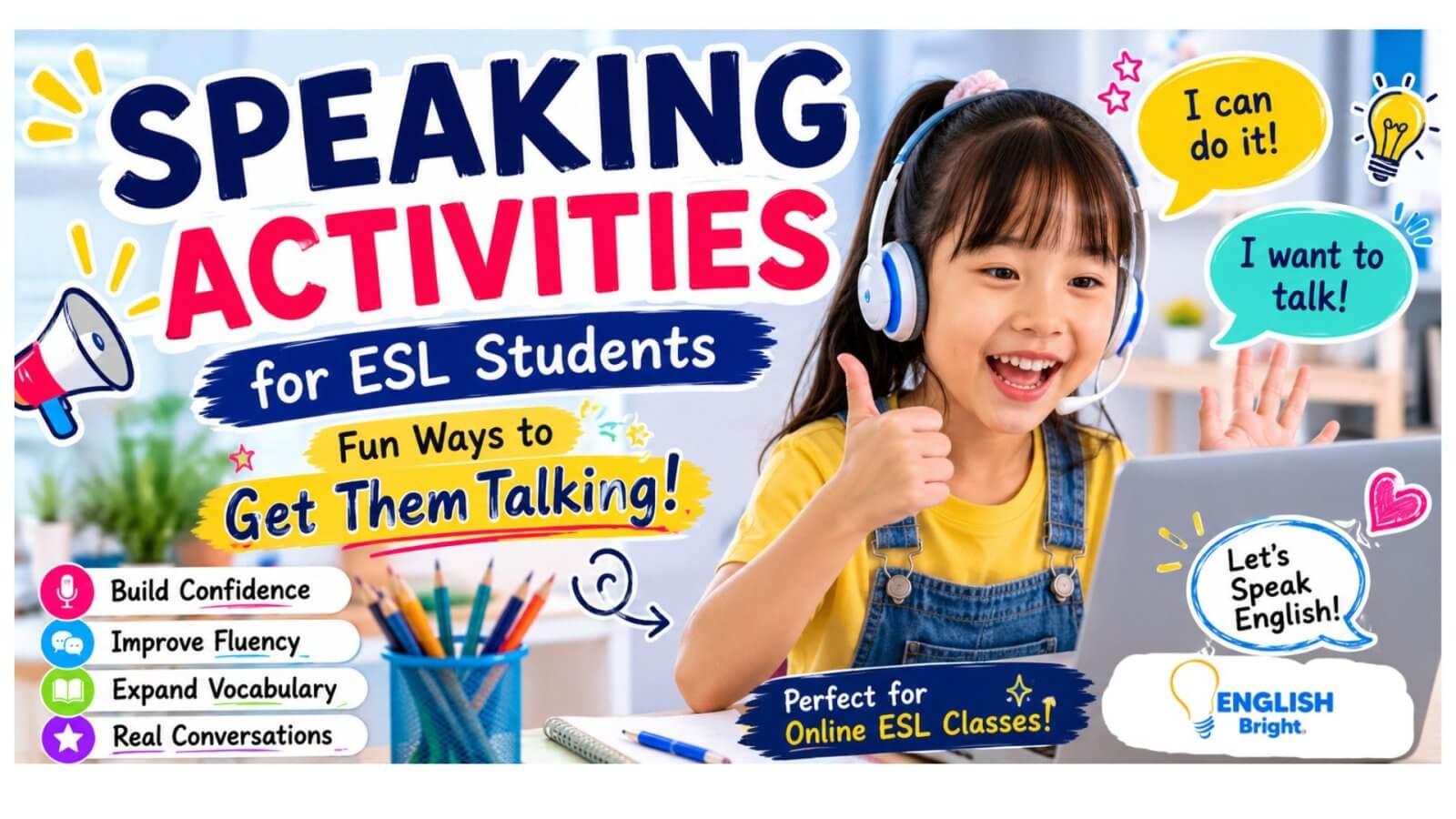
Helping ESL students speak confidently is one of the most important parts of language learning. Whether teaching online or in-person, engaging speaking activities make lessons fun, interactive, and effective.
This article introduces original activities designed to encourage learners to communicate, think creatively, and build confidence. These activities are suitable for all ages and levels, and one activity includes a tie-in with an English Bright lesson to make it immediately actionable for teachers.
1. Mystery Object Challenge
How it works:
- Teacher describes an object without showing it.
- Students ask yes/no questions to figure out what it is.
- Example: “Is it something you eat?” / “Can it be found in a classroom?”
Why it works:
- Promotes questioning, critical thinking, and speaking confidence
- Encourages learners to construct full sentences
- Works well in both online breakout rooms and physical classrooms
Variation:
- Students take turns describing objects for the class to guess
2. Emoji Storytelling (With English Bright Tie-In)
How it works:
- Share 3–5 emojis with students (on screen or paper).
- Students create a short story connecting the emojis and share with the class.
Why it works:
- Boosts creativity, vocabulary, and sentence-building skills
- Encourages spontaneous speaking and narrative practice
- Perfect for virtual or in-person classrooms
English Bright Lesson Tie-In:
- Level 0, Unit 1, Lesson 1: Starter – Colors
- Students use the emojis to represent objects of different colors (e.g., 🍎 red apple, 🟦 blue square).
- Practice forming simple sentences: “The apple is red.” / “The square is blue.”
- Helps students build sentence structures, vocabulary, and speaking confidence.

Teacher Tip:
- Show one object per emoji and encourage students to describe colors, actions, or emotions in their stories.
3. “Finish the Sentence” Game
How it works:
- Teacher starts a sentence: “If I could travel anywhere…”
- Students finish the sentence in complete thoughts.
- Example: “If I could travel anywhere, I would go to Japan because I love sushi.”
Why it works:
- Builds confidence in forming sentences
- Encourages students to think in English
- Can be adapted for timed responses online or in-person
Variation:
- Students build on each other’s sentences in a chain format
4. Role-Play Conversations
How it works:
- Students pair up and act out everyday situations:
- Ordering food at a restaurant
- Asking for directions
- Planning a birthday party
Why it works:
- Encourages natural language use in context
- Builds listening and speaking skills
- Can be done in online breakout rooms or in-class pairs
5. Word Association Challenge
How it works:
- Teacher says a word, e.g., “school.”
- Students take turns saying related words or short sentences:
- “School → classroom → desk → teacher → homework”
Why it works:
- Stimulates quick thinking and vocabulary recall
- Encourages spontaneous speaking and engagement
- Works for online or in-person classrooms
6. Story Dice Activity
How it works:
- Use story dice (physical or virtual with images)
- Students roll the dice and tell a story based on the images
- Each student adds 1–2 sentences per turn
Why it works:
- Supports creativity and sentence-building
- Students practice connectors like “and,” “then,” “because”
- Works individually or in small groups
7. Question Chain Game
How it works:
- Teacher asks a question: “What is your favorite hobby?”
- First student answers and asks a related question to the next student
- Example: “My favorite hobby is drawing. What about you?”
Why it works:
- Promotes active listening and fluent speaking
- Keeps students engaged and interacting with peers
- Suitable for online and in-person classrooms
Tips for Teachers
- Adapt to class size: Break large classes into smaller groups for interactive exercises
- Encourage full sentences: Model answers and provide examples
- Use visuals and props: Enhance engagement and understanding
- Time challenges: Use timers for short speaking bursts to maintain energy
- Rotate activities: Keep lessons dynamic by changing exercises regularly
Why These Activities Work
These speaking activities are effective because they:
- Encourage active participation and interaction
- Build confidence in speaking English
- Improve fluency, vocabulary, and sentence structure
- Stimulate creativity and critical thinking
- Adapt easily to both online and in-person lessons
Incorporating one English Bright lesson makes the activities actionable and provides teachers with structured, ready-to-use content that supports vocabulary, phonics, and sentence practice.
Conclusion
Creative speaking activities help ESL students speak more confidently, think creatively, and enjoy learning. Activities like Mystery Object Challenges, Emoji Storytelling (with the English Bright tie-in), Role-Plays, and Word Association can transform lessons into lively, engaging sessions for any classroom format.
Try these activities in your next lesson and see your students engage, communicate, and grow in English fluency!


Leave a Reply