
Vocabulary is one of the most important building blocks in language learning, and well-designed ESL Vocabulary Lessons can help students actively practise words in context. Without words, students cannot express ideas, ask questions, or participate in conversations. But simply memorizing vocabulary lists does not lead to real communication.
Effective ESL vocabulary lessons go beyond memorization. They help students understand words, pronounce them correctly, and most importantly, use them naturally in speaking.
When vocabulary lessons are structured properly, students move from recognizing a word to confidently using it in real conversations. This article explores how teachers can design vocabulary lessons for ESL students that lead to stronger speaking ability, better retention, and long-term language development.
Why Vocabulary Alone Is Not Enough
Many traditional vocabulary lessons focus mainly on recognition. Students see a picture, learn the word, repeat it a few times, and move on.
While this approach introduces new vocabulary, it rarely builds speaking confidence.
Students may remember the word during the lesson, but without structured practice, they often forget it quickly or hesitate to use it in conversation.
Effective ESL vocabulary lessons should guide students through several stages of learning:
- Word recognition
- Pronunciation practice
- Sentence formation
- Guided speaking
- Independent use
This progression helps vocabulary move from passive knowledge to active communication.
The Goal of ESL Vocabulary Lessons
The real goal of vocabulary lessons for ESL students is not simply learning new words. The goal is helping students use those words to communicate ideas.
When students learn vocabulary within structured speaking patterns, they begin to understand how language works.
Instead of saying only single words like:
“Octopus.”
Students can say full sentences such as:
“The octopus has three hearts.”
Or ask questions like:
“What animal has three hearts?”
This shift from isolated vocabulary to complete communication is what creates real speaking confidence.

A Structured Approach to Teaching Vocabulary
Strong ESL vocabulary lessons follow a simple but effective structure. This structure helps students absorb new vocabulary naturally while building speaking skills.
1. Introduce Vocabulary with Clear Visuals
Young learners especially benefit from visual support. When teachers introduce vocabulary with pictures, students can quickly connect meaning with the word.
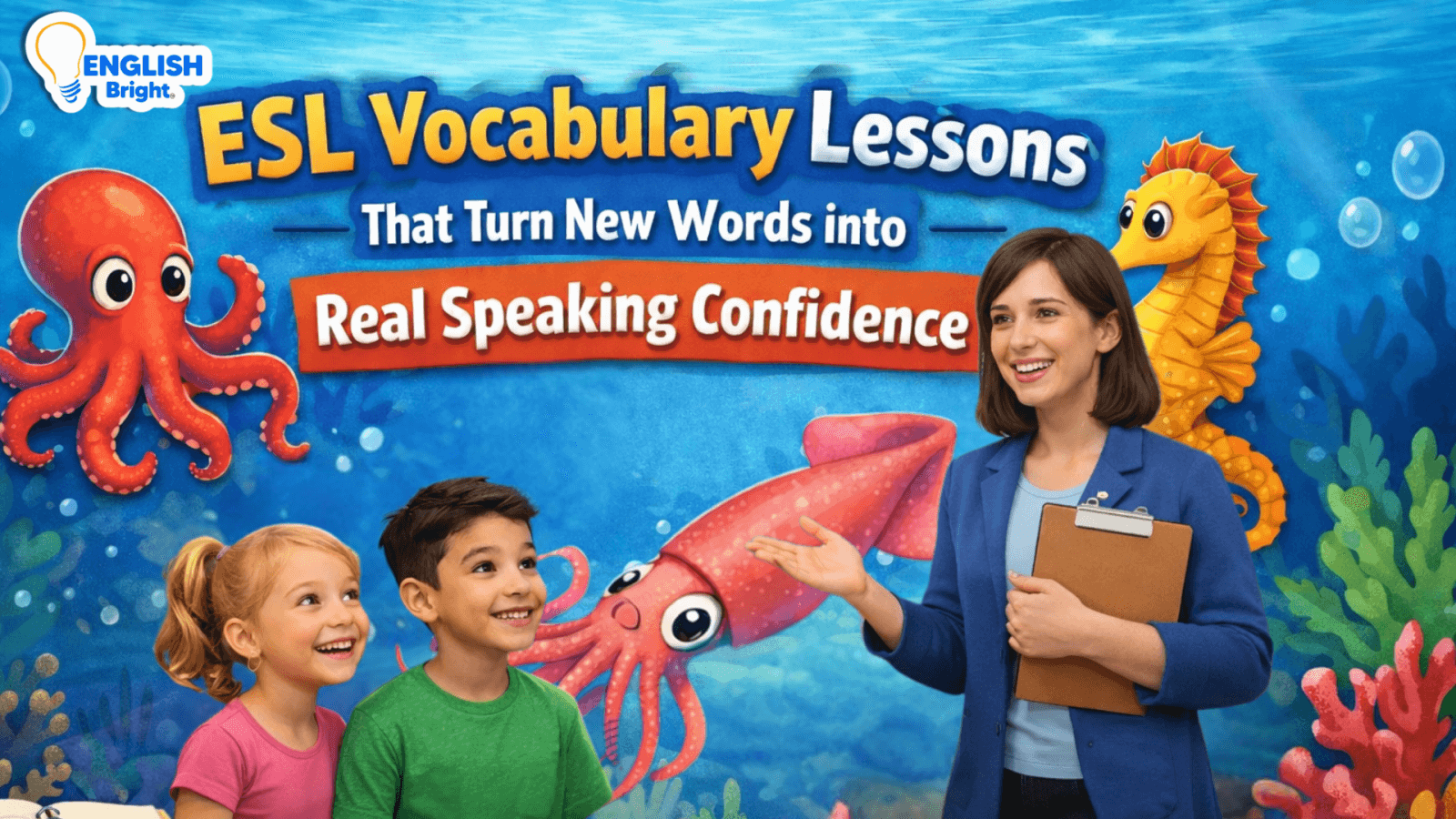
For example, if the lesson focuses on ocean animals, the teacher might show images of:
- An octopus
- A squid
- A seahorse
Students repeat the words while observing the pictures.
This stage builds recognition and pronunciation awareness.
2. Focus on Pronunciation and Repetition
Repetition is essential in vocabulary learning. Students need multiple opportunities to hear and say new words.
Teachers can guide students through simple pronunciation practice:
- “Octopus.”
- “Squid.”
- “Seahorse.”
Encouraging students to repeat several times helps them become comfortable with unfamiliar sounds.
Pronunciation practice also prevents students from forming incorrect habits early in the learning process.
3. Connect Vocabulary to Sentence Patterns
This is where many vocabulary lessons fall short. If students only repeat words, they never learn how to use them in real sentences.
Instead, vocabulary should be paired with clear sentence structures.
For example, in an ocean animal lesson, students might practice sentence patterns like:
“What animal has three hearts?”
“The octopus has three hearts.”
Or:
“What male animal gives birth to its young?”
“The seahorse gives birth to its young.”
These patterns help students understand how vocabulary fits naturally into conversation.
Example: Ocean Animal Vocabulary Lesson
A well-structured example of ESL vocabulary lessons might focus on interesting ocean animals.
In this lesson, students will learn about ocean animals, focusing on the vocabulary words octopus, squid, and seahorse.
Students explore fascinating facts about these animals while practicing meaningful speaking patterns.
For example:
- “What animal has three hearts?”
- “The octopus has three hearts.”
And:
- “What male animal gives birth to its young?”
- “The seahorse gives birth to its young.”
By combining vocabulary with interesting facts and structured questions, students stay engaged while practicing real communication.
Lessons like this demonstrate how vocabulary lessons for ESL students can be both educational and interactive.

Encouraging Speaking Through Guided Questions
Questions are powerful tools in vocabulary learning.
Instead of simply repeating vocabulary, students can practice answering questions related to the topic.
Teachers can ask:
“What animal has three hearts?”
Students respond:
“The octopus has three hearts.”
Or:
“What animal swims in the ocean?”
“The squid swims in the ocean.”
These guided questions encourage students to think, speak, and apply vocabulary naturally.
Over time, this method builds confidence and reduces hesitation.
Using Interesting Facts to Improve Engagement
One effective strategy in ESL vocabulary lessons is combining vocabulary with interesting facts.
Curiosity keeps students engaged.
For example:
- Octopuses have three hearts.
- Seahorses are unique because the male gives birth to the babies.
- Squids move through the water using jet propulsion.
When vocabulary is connected to surprising facts, students become more interested in the lesson.
They remember the words more easily because the information is meaningful.
Building Confidence Through Repetition and Variation
Students need repeated exposure to vocabulary before they feel comfortable using it.
However, repetition should not feel boring.
Teachers can vary activities while repeating the same vocabulary:
- Question and answer practice
- Guessing games
- Picture identification
- Sentence completion
- Short conversations
Each activity reinforces the same words in slightly different ways.
This approach strengthens retention while maintaining student engagement.

Why Structured Vocabulary Lessons Work Better
When vocabulary lessons follow a consistent structure, students experience several benefits:
Stronger Memory
Students remember vocabulary better when words are connected to sentences and ideas.
Better Pronunciation
Frequent repetition helps students develop accurate pronunciation.
Faster Speaking Development
Students learn how to use vocabulary immediately in communication.
Increased Confidence
Students feel more comfortable speaking when they know exactly how to use new words.
This is why well-designed ESL vocabulary lessons focus not only on learning words, but on using them.
Supporting Vocabulary Development with Digital Lessons
Online teaching has changed how many teachers deliver vocabulary lessons.
Digital platforms allow teachers to combine:
- Visual images
- Interactive questions
- Structured sentence patterns
- Speaking practice
For example, many teachers use English Bright ESL lessons to guide vocabulary instruction in a structured way.
English Bright ESL lessons present vocabulary alongside sentence patterns and speaking activities, helping students move from recognition to real communication.
Instead of preparing multiple materials separately, teachers can follow a clear lesson structure that supports vocabulary development step by step.
This approach saves preparation time while helping students build stronger speaking skills.
Helping Students Turn Vocabulary into Communication
The biggest challenge in language learning is moving from knowing words to using words.
Strong vocabulary lessons for ESL students bridge this gap.
They help students:
- Understand vocabulary
- Pronounce words correctly
- Form sentences
- Ask and answer questions
- Speak with confidence
When vocabulary is taught in this way, students do not just memorize words.
They develop the ability to communicate.
Final Thoughts
Vocabulary is the foundation of language learning, but vocabulary alone is not enough. Students need structured opportunities to use new words in meaningful ways.
Well-designed ESL vocabulary lessons guide students from recognition to communication through repetition, sentence patterns, and interactive speaking practice.
Whether the lesson focuses on ocean animals like octopus, squid, and seahorse, or everyday topics such as food, family, or school, the goal remains the same:
Helping students turn vocabulary into real speaking confidence.
When teachers combine clear structure, engaging topics, and guided speaking practice, vocabulary lessons become powerful tools for language development.
See how this vocabulary lesson comes to life in a real class. Watch the video below.

Leave a Reply