
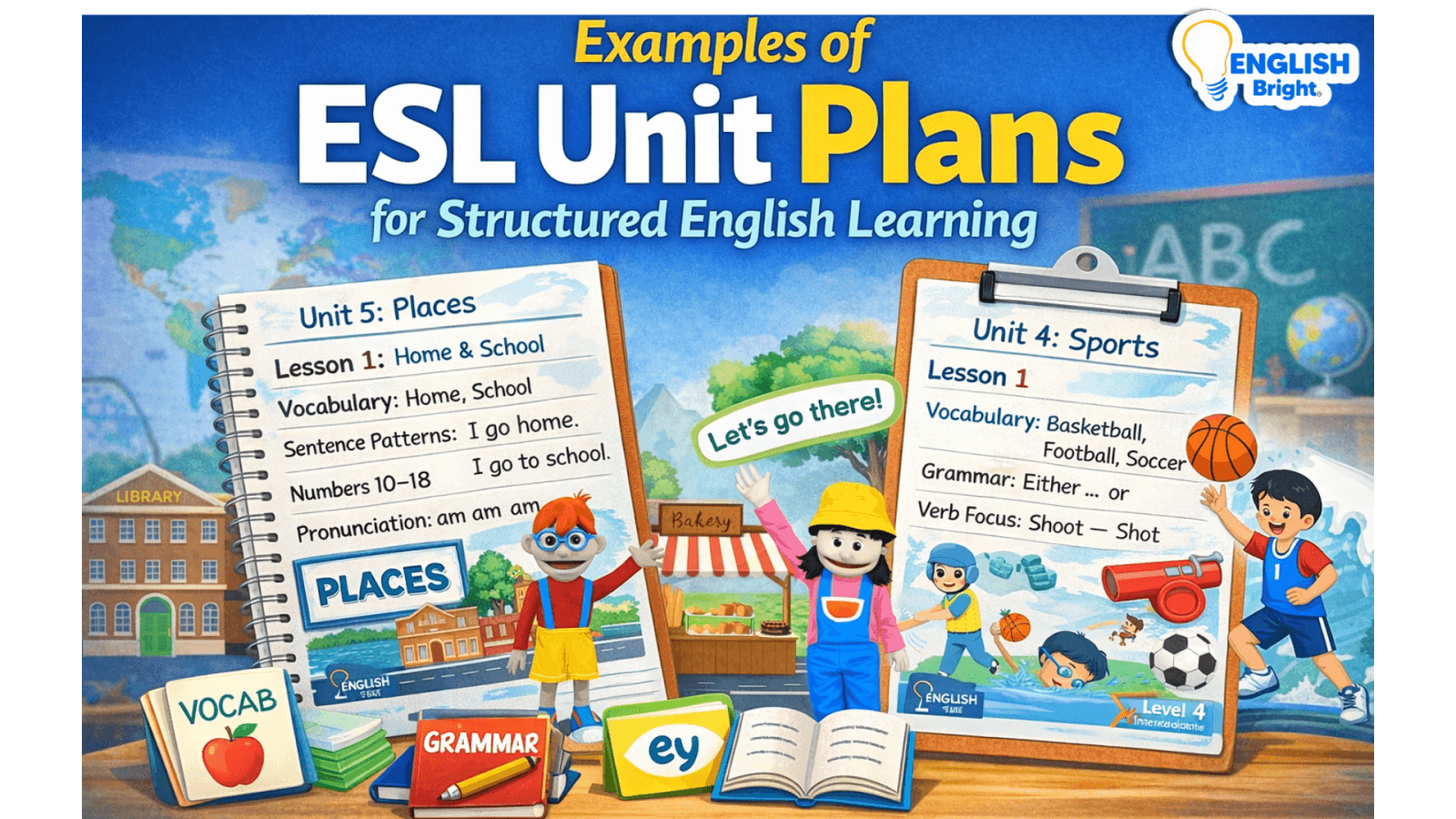
Teaching English effectively requires more than a collection of random activities. While games, flashcards, and worksheets can make lessons fun, long-term language progress happens when lessons are organized into clear learning pathways. This is where ESL unit plans become essential.
Well-designed ESL unit plans help teachers connect vocabulary, sentence patterns, grammar, pronunciation, and reading into a logical structure that builds student confidence over time. Instead of teaching isolated lessons, educators guide students through a sequence where each lesson reinforces and expands what came before.
In this article, we will explore what ESL unit plans are, why they matter for language development, and share examples of ESL unit plans that illustrate how structured learning supports stronger English skills.
What Are ESL Unit Plans?
An ESL unit plan is a structured set of lessons organized around a central theme or topic. Instead of teaching disconnected lessons, teachers group related concepts into a unit that allows students to develop language skills gradually.
A typical unit may focus on topics such as:
- Places
- Food
- Sports
- Weather
- Family
- Daily routines
Within that topic, esl unit lesson plans guide students through vocabulary development, sentence construction, pronunciation practice, and reading activities.
The goal is simple:
Students encounter language repeatedly across different activities so they can recognize, understand, and eventually use the language independently.
Without structured units, lessons may feel scattered. With a clear ESL unit plan, teachers create a predictable and effective learning system.
Why ESL Unit Plans Improve Language Learning
Structured ESL unit plans offer several advantages for both teachers and students.
1. Clear Learning Progression
Each lesson builds upon previous knowledge. Students begin with simple vocabulary and gradually move toward longer sentences and more complex communication.
2. Repetition with Purpose
Language learning requires repetition, but effective repetition happens in different contexts. A unit allows students to practice the same vocabulary through speaking, reading, grammar practice, and pronunciation.
3. Confidence Through Familiar Patterns
When lessons follow a consistent format, students understand what to expect. This predictability reduces anxiety and encourages participation.
4. Efficient Teaching Preparation
Teachers often spend hours preparing lessons. Structured esl unit lesson plans reduce this workload by providing organized material that teachers can follow while focusing more on student interaction.
A Structured Approach to ESL Unit Plans
A strong ESL unit plan typically includes multiple components that work together to develop language ability.
These components often include:
- Vocabulary introduction
- Sentence patterns for speaking practice
- Grammar focus
- Phonics or pronunciation training
- Reading activities
- Review and knowledge checks
By combining these elements within each lesson, teachers create a balanced learning experience that supports multiple language skills simultaneously.
How Structured Curriculum Supports ESL Unit Plans
One example of a curriculum designed around structured ESL unit plans is English Bright ESL.
English Bright provides structured ESL lessons that are ready to teach, allowing educators to focus on teaching rather than spending hours creating materials. The curriculum is designed to help teachers save preparation time while maintaining consistent lesson quality.
The program includes six teaching levels, ranging from beginner learners to more advanced students.

English Bright ESL Levels:
- Level 0 – Starter
- Level 1 – Beginner
- Level 2 – Elementary
- Level 3 – Lower Intermediate
- Level 4 – Intermediate
- Level 5 – Upper Intermediate
- Level 6 – Advance
Each level is divided into units, and each unit contains 12 structured lessons. These lessons follow a consistent structure that supports gradual language development.
Every lesson typically includes:
- Vocabulary
- Sentence patterns
- Grammar
- Phonics
- Tongue twisters
- Pronunciation practice
- Reading activities
At the end of each unit, review activities and knowledge checks help teachers confirm that students understand the material before moving forward.
This type of structure makes it easier for teachers to follow clear ESL unit plans while ensuring students develop a complete set of language skills.
Example 1: Starter Level ESL Unit Plan (Level 1)
One example of an ESL unit plan designed for starter learners can be found in Unit 5: Places.

This unit helps students understand common locations while practicing basic sentence patterns.
Unit Theme
Places
Students learn vocabulary related to everyday locations such as home and school.
Lesson 1 Overview
In this lesson, students will learn about the places home and school.

The key sentence patterns are:
- “I go home.”
- “I go to school.”
These simple sentence structures help beginners practice expressing everyday actions.
Vocabulary Focus
Students learn two core vocabulary words:
- Home
- School
Teachers can use visual images or flashcards to reinforce meaning.
Speaking Practice
Students repeat the key sentence patterns and practice describing their daily routines. Repetition helps them gain confidence in basic communication.
Counting Practice
Students will also count numbers from 10 to 18, integrating basic numeracy into the lesson.
This combination of language and numbers supports cognitive development while maintaining student engagement.
Pronunciation and Oral Motor Exercises
To strengthen pronunciation skills, students participate in oral motor exercises such as:
- “am am am”
- “yam yam yam”
- “an an an”
- “man man man”
These exercises help students develop stronger mouth movements, which improves articulation and pronunciation.
Learning Goal
By the end of the lesson, students should be able to:
- Recognize the words home and school
- Say the sentences “I go home” and “I go to school”
- Count numbers up to 18
- Practice basic pronunciation patterns
This example demonstrates how a well-designed ESL unit plan supports multiple skills within a single lesson.
Example 2: Intermediate ESL Unit Plan (Level 4)

As students progress, ESL unit plans become more complex, integrating grammar, verbs, and discussion topics.
An example from Level 4 focuses on the theme of sports.
Unit Theme
Sports
Students explore popular sports and learn how to describe actions and teamwork.
Lesson 1 Overview
In this lesson, students will explore the exciting world of sports through key vocabulary such as:

- Basketball
- Football
- Soccer
These topics naturally encourage discussion and help students relate language to real-life activities.
Sentence Pattern Practice
Students practice longer sentence patterns such as:
- “How did the basketball players enjoy the local park?”
- “How did the football team show their skill on the field?”
- “How did the soccer players show their teamwork during the match?”
These questions encourage students to describe events and actions using complete sentences.
Verb Focus
The lesson introduces the verb shoot – shot, helping students understand how actions change in different tenses.
Students practice sentences such as:
- “The player shot the ball.”
- “The athlete shoots quickly.
This helps learners understand verb transformation.
Grammar Focus
Grammar instruction introduces either… or, allowing students to express choices.
For example:
- “We can play either basketball or soccer.”
- “The team can practice either today or tomorrow.”
This structure expands students’ ability to express preferences and options.
Phonics Practice
Phonics focuses on the -ey sound, helping students improve pronunciation and reading accuracy.
Examples may include words such as:
- they
- key
- monkey
Phonics practice strengthens decoding skills and improves reading fluency.
Discussion and Communication
Students are encouraged to talk about sports activities and teamwork, helping them practice speaking in longer sentences.
Learning Goal
By the end of the lesson, students should be able to:
- Describe sports activities
- Use verbs like shoot – shot
- Apply either… or in conversation
- Improve pronunciation of the -ey sound
- Participate in structured discussions
This example shows how esl unit lesson plans evolve as students move to higher levels.
The Importance of Review and Knowledge Checks
Every effective ESL unit plan includes regular review sessions.
Within English Bright units, the 12 lessons per unit allow teachers to introduce language, reinforce it through multiple lessons, and finally evaluate understanding through review and knowledge checks.
These reviews help teachers answer important questions:
- Did students understand the vocabulary?
- Can they use the sentence patterns independently?
- Are they pronouncing the sounds correctly?
- Are they ready for the next unit?
Without review, students may forget previously learned material. With structured knowledge checks, teachers ensure consistent progress.
Why Structured ESL Unit Plans Save Teachers Time
Many teachers struggle with preparation time. Planning vocabulary, creating sentence patterns, designing pronunciation exercises, and organizing grammar explanations can take hours.
This is why structured systems such as English Bright ESL are valuable.
Because the lessons are ready to teach, educators can focus on classroom interaction instead of lesson creation.
Structured ESL unit plans also ensure consistency across lessons, making it easier for teachers to maintain quality while managing multiple students.


Leave a Reply