
If you’re looking for ESL teaching methods that keep students engaged while helping them make real progress, you’re not alone. Every ESL teacher wants lessons that encourage speaking, improve vocabulary retention, and build confidence without spending hours preparing materials.
The truth is that there is no single best method for every classroom. The most successful teachers combine different ESL teaching methods and techniques depending on their students’ age, proficiency level, and learning goals. Whether you teach online or in person, understanding a variety of approaches allows you to adapt your lessons and keep learning fresh throughout the year.
In this guide, we’ll explore the best ESL teaching methods, when to use them, and practical ways to apply them in your own classroom.
Why ESL Teaching Methods Matter
Using effective ESL teaching methods does much more than teach vocabulary or grammar. The right approach helps students:
- Speak English more confidently
- Improve listening comprehension
- Develop reading and writing skills
- Retain vocabulary longer
- Stay motivated and engaged
- Participate actively during lessons
Instead of relying on worksheets or memorization alone, successful teachers combine activities that encourage students to use English naturally.

1. The Communicative Language Teaching (CLT) Method
One of the most popular ESL teaching methods and approaches is Communicative Language Teaching.
Rather than focusing only on grammar rules, CLT encourages students to communicate using English in realistic situations.
Examples include:
- Role-playing
- Pair discussions
- Interviews
- Information gap activities
- Problem-solving tasks
Students learn by actually using the language rather than simply studying it.
This remains one of the best teaching methods for ESL learners because communication is the ultimate goal of language learning.
2. Direct Method ESL Teaching
The direct method ESL teaching approach avoids translating into the student’s native language.
Instead, teachers explain new vocabulary through:
- Pictures
- Gestures
- Demonstrations
- Real-life objects
- Context
The direct method of teaching ESL encourages students to think directly in English, improving fluency over time.
This method works especially well with beginners because visual support makes lessons easier to understand.
3. Total Physical Response (TPR)
TPR is one of the most enjoyable teaching methods for ESL students, especially young learners.
Students respond to commands with physical movement.
Examples include:
- Stand up.
- Touch your nose.
- Open the book.
- Jump three times.
Movement helps students remember vocabulary while reducing anxiety.
TPR is ideal for:
- Kindergarten
- Elementary students
- Absolute beginners
4. Task-Based Learning (TBL)
Task-Based Learning encourages students to complete meaningful tasks using English.
Instead of studying grammar first, students use English to solve problems.
Activities may include:
- Planning a vacation
- Ordering food
- Designing a classroom
- Creating a shopping list
- Giving directions
Grammar is reviewed after students complete the task.
This practical approach builds confidence and real-world communication skills.
5. Content-Based Instruction
In this method, students learn English while learning another subject.
Topics may include:
- Science
- Geography
- History
- Animals
- Culture
Students naturally acquire new vocabulary because they are focused on understanding interesting content rather than memorizing isolated words.
6. Lexical Approach
Instead of teaching individual vocabulary words, the Lexical Approach teaches common word combinations.
Examples include:
- take a break
- make a decision
- have breakfast
- by the way
- as soon as possible
Students sound more natural because they learn language chunks used by native speakers.
This approach improves speaking fluency much faster than memorizing single words.
7. Project-Based Learning
Project-Based Learning combines several ESL teaching methods and strategies into one larger activity.
Students work together to complete projects such as:
- Creating posters
- Recording presentations
- Producing travel brochures
- Making videos
- Designing menus
Projects encourage collaboration while developing speaking, reading, writing, and listening skills simultaneously.
8. Grammar in Context
Many teachers wonder about the most effective methods for teaching grammar to young ESL students.
Instead of teaching grammar rules in isolation, introduce grammar through meaningful examples.
For example, rather than simply teaching the present continuous tense, show students pictures of children playing and ask:
- What is she doing?
- She is reading.
- They are running.
Students discover grammar while communicating.
This makes grammar easier to remember and far more enjoyable.
9. Game-Based Learning
Games transform practice into something students genuinely enjoy.
Popular classroom games include:
- Vocabulary matching
- Sentence races
- Word bingo
- Quiz competitions
- Spinner games
- Memory games
Games increase participation while providing valuable repetition without making lessons feel repetitive.
This is one reason game-based learning remains one of the best ESL teaching methods for learners of all ages.
10. Blended Learning
Technology has transformed modern methods of teaching ESL.
Blended learning combines:
- Teacher instruction
- Interactive online lessons
- Digital games
- Homework platforms
- Speaking practice
- Video activities
Students receive additional exposure to English outside the classroom while teachers save valuable preparation time.
This approach works especially well for both classroom teachers and online tutors.

How to Choose the Best ESL Teaching Method
There is no universal best method for teaching ESL because every learner is different.
Instead, consider:
Student Age
Young learners benefit from:
- TPR
- Songs
- Games
- Visual lessons
Teenagers enjoy:
- Role plays
- Debates
- Projects
- Discussions
Adults often prefer:
- Real-life conversations
- Business English
- Practical vocabulary
- Problem-solving activities
English Level
Beginners need:
- Pictures
- Repetition
- Simple speaking
- Short activities
Intermediate learners benefit from:
- Pair work
- Storytelling
- Projects
- Listening practice
Advanced students enjoy:
- Debates
- Presentations
- News discussions
- Critical thinking activities
Learning Goals
If students want better speaking skills:
Use:
- Communicative activities
- Role plays
- TPR
- Conversation practice
If grammar is the priority:
Use grammar in context rather than isolated drills.
If vocabulary is the goal:
Choose games, storytelling, and reading activities.
Combine Multiple Teaching Methods
Experienced teachers rarely use only one approach.
Instead, a single lesson may include:
- Warm-up conversation
- TPR review
- Vocabulary presentation
- Grammar in context
- Pair speaking
- Interactive game
- Homework review
Mixing approaches keeps lessons dynamic while meeting different learning styles.
This flexibility is what makes experienced teachers so effective.

Save Time with English Bright ESL Interactive Lessons
Knowing the best method to teach ESL is important—but creating engaging lessons every day can take hours.
That’s where English Bright ESL makes teaching easier.
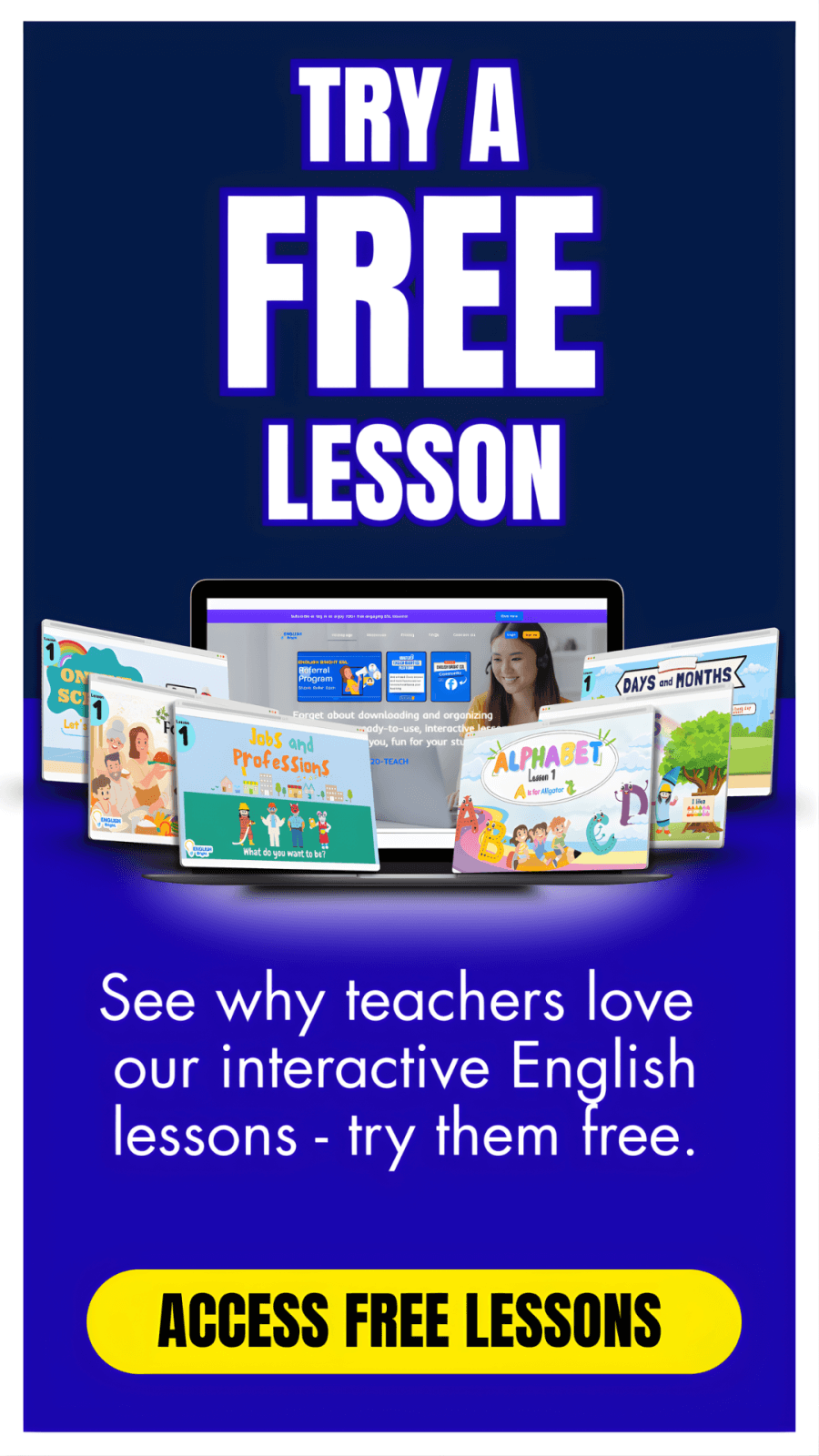
English Bright ESL provides ready-to-use interactive lessons designed around proven ESL teaching methods and strategies. Instead of building lessons from scratch, teachers gain access to engaging materials that promote speaking, listening, reading, grammar, vocabulary, and real communication.
The platform includes:
- Interactive speaking activities
- Structured grammar practice in context
- Vocabulary lessons with visuals and audio
- Reading comprehension exercises
- Story-based learning
- Pronunciation practice
- Classroom games
- Homework assignments
- Knowledge checks
- Digital rewards that motivate learners
Whether you’re teaching complete beginners or more advanced students, English Bright ESL helps you apply the most effective ESL teaching methods and techniques while dramatically reducing lesson preparation time.
Instead of spending your evenings creating materials, you can focus on what matters most—helping students build confidence and communicate naturally in English.
Final Thoughts
The most successful teachers understand that there isn’t a single perfect teaching style. The strongest ESL teaching methods combine communication, interaction, movement, meaningful grammar practice, and engaging activities that keep students actively involved.
By blending approaches such as Communicative Language Teaching, direct method ESL teaching, TPR, project-based learning, and game-based instruction, you can create lessons that students genuinely enjoy and remember.
And if you’re looking for a complete teaching solution that puts these proven methods into practice, English Bright ESL offers hundreds of interactive lessons designed to make teaching easier and learning more effective—all year long.

Leave a Reply