
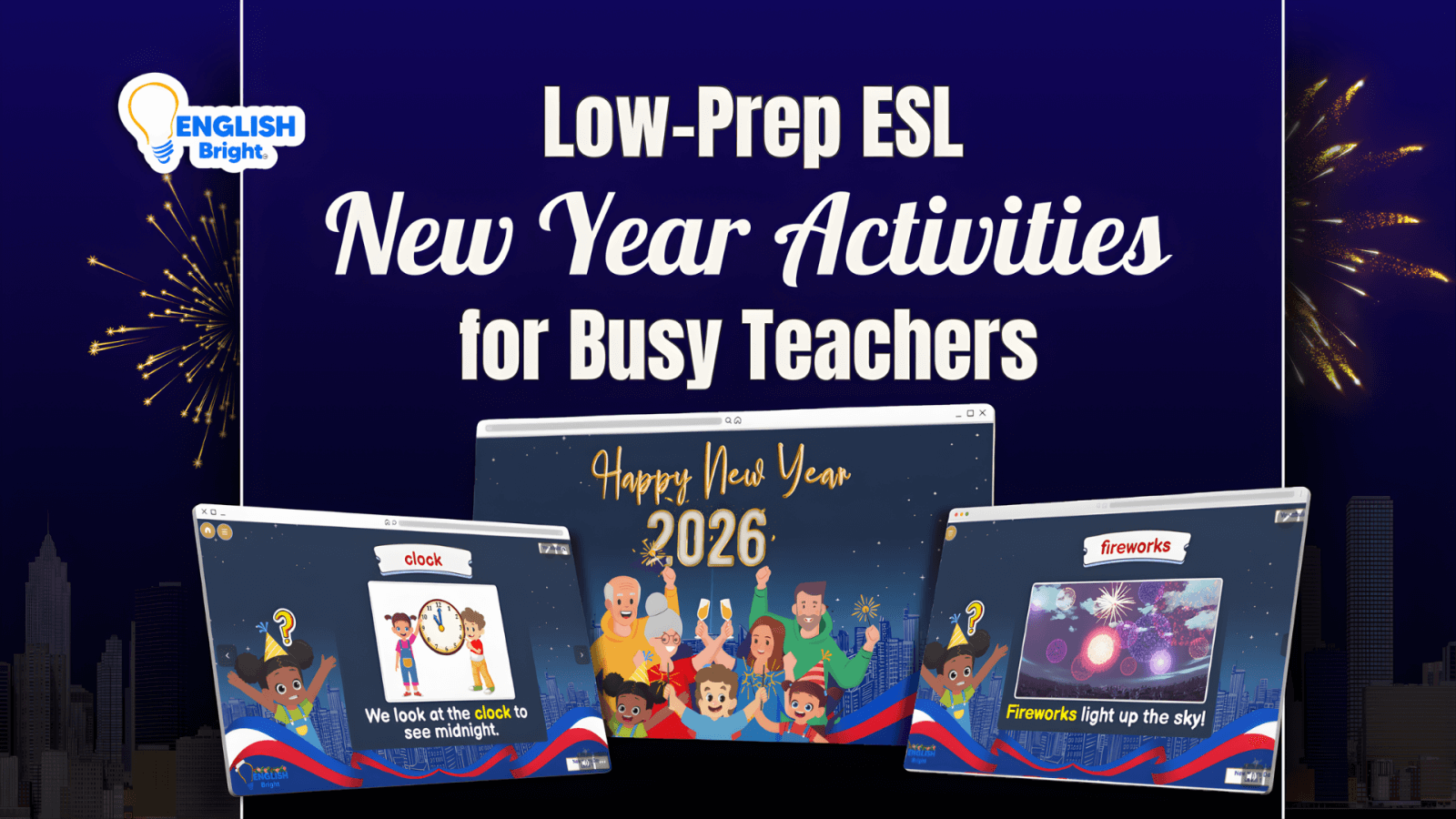
The start of a new year is an exciting time in the ESL classroom, but for many teachers, it can also be overwhelming. After the holidays, teachers often return to full schedules, lesson planning pressure, and high expectations from students and parents. While New Year lessons are a great opportunity to refresh routines and motivate learners, not every teacher has the time to prepare complex activities or elaborate materials.
This is where low-prep ESL New Year activities become essential. Busy teachers need lessons that are meaningful, structured, and engaging without requiring hours of preparation. A well-designed New Year ESL lesson can still be effective even with minimal setup, as long as it focuses on clear language goals and age-appropriate learning outcomes.
ESL New Year activities work best when they feel familiar to students while still introducing a festive theme. Instead of completely changing your teaching style, you can build on your regular lesson flow and simply adjust the content to match the New Year context. This allows students to feel confident while practicing new language in a fun and relevant way.
For young learners and beginners especially, New Year lessons should focus on repetition, clarity, and consistency. When lessons are predictable in structure, students are more likely to participate actively and use the target language. Low-prep activities help teachers maintain this structure while reducing stress and saving valuable time.
A strong New Year ESL lesson does not rely on complicated crafts or extra materials. Instead, it centers on essential language skills such as vocabulary development, sentence patterns, basic grammar awareness, and phonics practice. When these elements are combined thoughtfully, teachers can deliver engaging ESL New Year activities that support learning and classroom management at the same time.
Why Low-Prep ESL New Year Activities Work
For teachers, low-prep lessons reduce burnout and allow more energy to be spent on student interaction. When planning time is limited, having a simple New Year ESL lesson structure ensures that learning goals are still met without sacrificing quality.
These activities also adapt well to both online and classroom teaching. Because they rely on core ESL skills, teachers can easily reuse or modify them for different levels and class sizes.

Vocabulary in ESL New Year Activities
Vocabulary is a key component of ESL New Year activities. New Year-themed words help students connect language learning to real-world events and celebrations. Teaching vocabulary during New Year lessons allows students to describe time, events, and celebrations in a meaningful way.
Low-prep vocabulary instruction works best when words are introduced clearly and recycled throughout the lesson. Repetition across different parts of the New Year ESL lesson helps students remember and confidently use new words.

Sentence Patterns for New Year ESL Lessons
Sentence patterns give structure to ESL New Year activities. By focusing on simple and consistent sentence frames, students can practice speaking without feeling overwhelmed. Sentence patterns support confidence, accuracy, and fluency, especially for beginners.
In low-prep lessons, sentence patterns can be reused across activities, making the lesson easy to manage while maximizing student output. This approach ensures that learners practice complete sentences rather than isolated words.
Grammar Focus in ESL New Year Activities
Grammar does not need to be complicated in a New Year ESL lesson. Simple grammar points can be naturally included through repeated sentence use and guided practice. This helps students understand language patterns without formal explanations.
Low-prep ESL New Year activities allow grammar to be introduced in context, making it easier for students to grasp and apply. This method supports long-term understanding rather than memorization.
Phonics Practice in New Year ESL Lessons
Phonics is especially important for young ESL learners, and New Year lessons provide a great opportunity to reinforce sound awareness. Including phonics in ESL New Year activities helps students connect sounds to letters and improve pronunciation.
Low-prep phonics activities fit naturally into short lesson segments and can be easily repeated. This consistent exposure strengthens reading readiness and listening skills without adding extra preparation work for teachers.

Leave a Reply