
Teaching English to young learners becomes much more effective when lessons are engaging, simple, and meaningful. One of the best ways to achieve this is through ESL short stories. Stories help children connect words with real-life situations, making English story reading both enjoyable and memorable.
Instead of memorizing vocabulary lists, kids learn naturally through context. With the right English short stories for reading, students can improve their vocabulary, speaking, and comprehension skills while having fun.
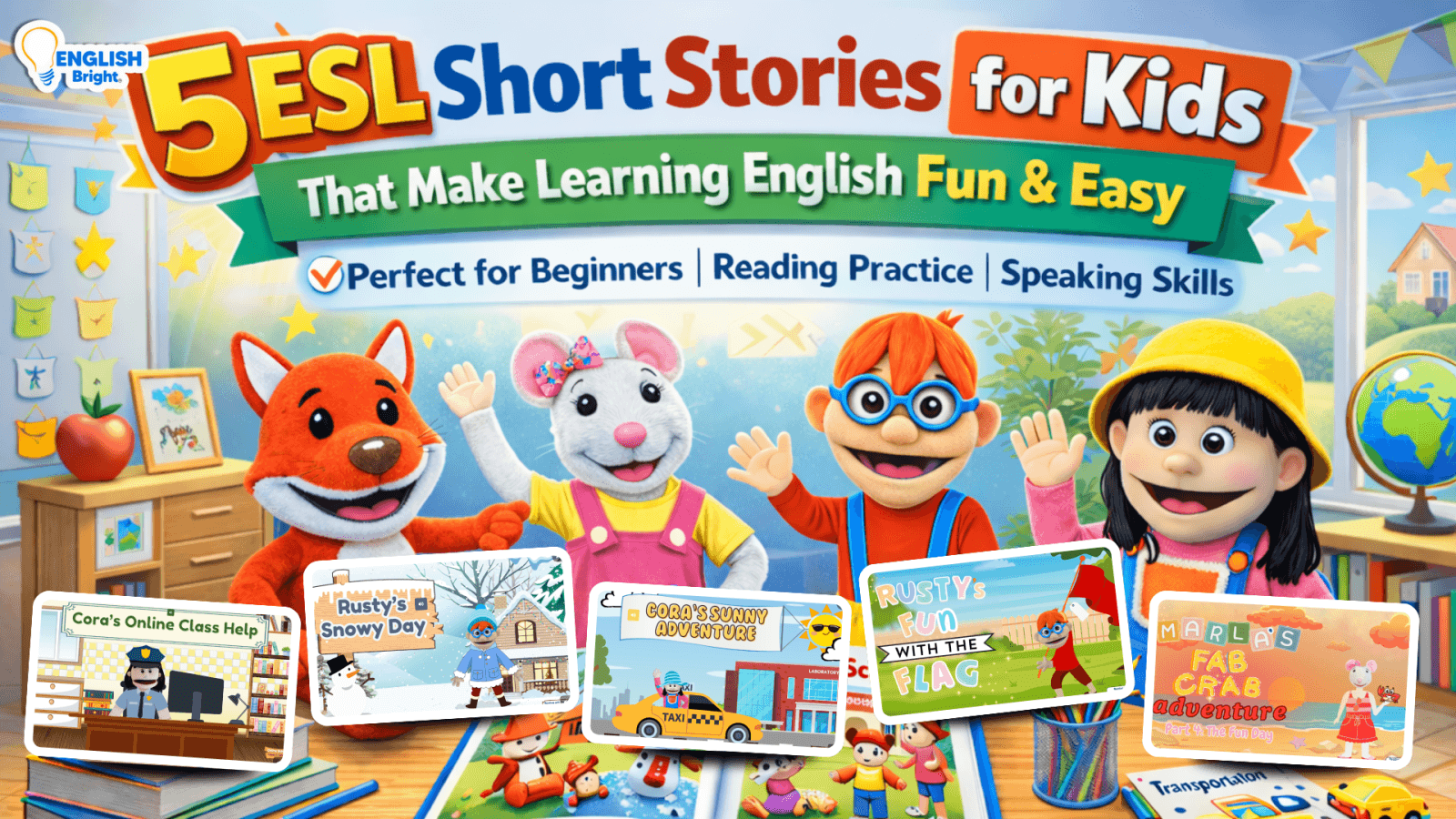
In this article, we’ll explore 5 ESL short stories for kids from English Bright ESL that are perfect for both online and classroom learning.
Why ESL Short Stories Are Effective for Kids
Young learners need more than repetition—they need engagement. This is where ESL short stories shine.
Here’s why they work so well:
- Context-based learning – Words are easier to understand when used in a story
- Improved memory – Stories help children remember vocabulary longer
- Speaking practice – Kids can repeat sentences and act out scenes
- Confidence building – Simple stories make learning feel achievable
Using English story reading regularly in your lessons can turn passive learners into active participants.

1. Cora’s Online Class Help: Internet Tools for Online Learning
This modern and relatable story follows Cora as she helps her classmates navigate their online class.
As Cora uses her tablet, microphone, and learning apps, students are introduced to essential vocabulary used in online ESL lessons. This makes it especially useful for teachers conducting virtual classes.
Key Learning Focus:
- Online learning tools vocabulary
- Simple sentence structures
- Real-life ESL classroom context
Why Kids Love It:
Children enjoy seeing familiar tools like tablets and microphones in stories. It helps them connect their own learning experience with the lesson.

2. Rusty’s Snowy Day
In this fun and imaginative story, Rusty explores a snowy day filled with adventure.
Students are introduced to winter vocabulary while practicing phonics through simple and repetitive sentence patterns. This story is perfect for seasonal lessons or introducing new descriptive words.
Key Learning Focus:
- Phonics practice
- Winter and weather vocabulary
- Descriptive language
Why It Works:
The repetitive structure makes it easy for beginners to follow along, while the theme keeps them engaged.

3. Exploring Phonics and Weather on Cora’s Sunny Adventure
In this sunny adventure, Cora explores the bright world around her, introducing young readers to the joys of a sunny day. With simple text and lively illustrations, this story helps ESL learners practice phonics through weather-related vocabulary like “sunny” and “shine.”
Key Learning Focus:
- Weather vocabulary (sunny, shine, day)
- Phonics practice with simple “sh” and “s” sounds
- Basic sentence structure for describing the weather
Why It Works:
This story uses a familiar and positive setting—a sunny day—to make learning feel natural and enjoyable. The repetition of simple weather words helps reinforce pronunciation and builds confidence, making it ideal for beginner ESL learners.

4. Reading with Phonics: -ag and -am “Rusty’s Fun with the Flag”
This delightful story follows Rusty as he explores a fun day with a colorful flag. Through simple sentences and engaging illustrations, young readers practice phonics with the -ag and -am blends, including words like “bag” and “tag.”
Key Learning Focus:
- Phonics patterns (-ag, -am word families)
- Vocabulary building (bag, tag, flag, jam)
- Reading simple CVC word patterns
Why It Works:
The focus on word families helps learners recognize patterns in English spelling and pronunciation. Repetition of similar sounds strengthens decoding skills, making it easier for young ESL learners to read independently.

5. Reading with Phonics : -ab and -ad “Marla’s Fab Crab Adventure”
This engaging story follows Marla and her crab friend on a fun-filled adventure at the beach. As they explore together, young readers practice phonics with the -ab and -ad blends, such as “cab,” “lab,” and “mad.” With simple, repetitive text and colorful illustrations, the story reinforces phonics skills while following Marla’s exciting day. A short reading comprehension quiz at the end checks understanding, making it an ideal resource for young ESL learners.
Key Learning Focus:
- Phonics patterns (-ab, -ad word families)
- Vocabulary development through repetition
- Reading comprehension and simple sentence structures
Why It Works:
The combination of storytelling, repetition, and a comprehension check makes learning both interactive and effective. Students not only practice phonics but also develop understanding and confidence through guided reading activities.
How to Use ESL Short Stories in Your Lessons
To get the most out of ESL short stories, try these simple teaching strategies:
1. Read Together
Start by reading the story aloud. Encourage students to repeat after you.
2. Ask Simple Questions
Use easy questions like:
- “What is it?”
- “Who is she?”
3. Act It Out
Let students role-play parts of the story to improve speaking skills.
4. Use Visuals
Pair stories with images or flashcards to support understanding.
5. Repeat and Review
Repetition helps young learners build confidence and fluency.
How English Bright ESL Makes Story-Based Learning Easier
English Bright ESL is designed to make teaching easier and more effective through structured, interactive lessons.
With built-in ESL short stories, teachers can:
- Save time on lesson preparation
- Keep students engaged with interactive content
- Reinforce vocabulary through stories and activities
Each story is carefully designed for English story reading, making it easy for teachers to guide students step by step.
Start Using ESL Short Stories Today
If you want to make your lessons more engaging and effective, start incorporating ESL short stories into your teaching routine.
Stories like:
- Cora’s Online Class Help
- Rusty’s Snowy Day
- Exploring Phonics and Weather on Cora’s Sunny Adventure
- Rusty’s Fun with the Flag
- Marla’s Fab Crab Adventure
provide the perfect balance of fun and learning.
By using English short stories for reading, you’re not just teaching English—you’re helping children build confidence, improve communication skills, and enjoy the learning process.

Leave a Reply